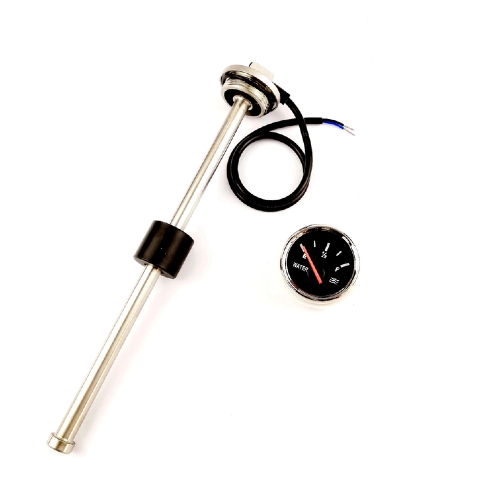
Pump systems that rely on manual monitoring often face recurring problems: pumps may start too late, stop too late, or continue operating even when a tank is empty. These issues can lead to equipment damage, wasted energy, and unstable system performance. A water level probe sensor becomes far more valuable when it is connected to a programmable logic controller and used as part of an automated control system. Instead of depending on visual checks or manual switching, the sensor sends reliable signals to the PLC, allowing the system to start or stop pumps automatically according to liquid levels. This integration helps ensure stable water management, protects pumps from dry running, and reduces unnecessary cycling that shortens equipment life.
Why PLC integration matters in water level control
Moving from manual checking to automatic response
Traditional tank monitoring methods often rely on manual observation or simple mechanical switches. Operators must check liquid levels periodically and decide when to start or stop pumps. While this approach may work in small systems, it becomes inefficient and risky in larger operations where tanks are continuously filling and draining.
PLC integration allows the system to respond automatically to changes in liquid level. Once the sensor detects a defined level threshold, the PLC receives the signal and immediately triggers the corresponding action. Pumps can start when the level drops below a safe minimum and stop when the tank reaches the desired level.
Automation eliminates delays caused by manual monitoring and helps maintain consistent operating conditions.
Preventing overflow, dry-run, and frequent pump cycling
One of the primary goals of integrating sensors with PLC systems is to prevent operational hazards. When pumps run without sufficient liquid, they may overheat or suffer mechanical damage. Similarly, when tanks overflow, valuable resources may be wasted and safety risks can increase.
By connecting the sensor to a PLC, the system can monitor multiple level points and adjust pump behavior accordingly. For example, the PLC may shut down the pump immediately if the tank reaches a critical low level, protecting the equipment from dry operation.
Automation also helps reduce frequent pump cycling. Rapid start-stop cycles can stress mechanical components and reduce pump lifespan. PLC logic allows operators to implement delays or buffer zones between switching points, ensuring smoother system behavior.
Why stable level signals improve system life
Stable level signals allow the PLC to make accurate decisions about pump operation. When sensor signals fluctuate due to unstable installation or incorrect wiring, the PLC may interpret these changes as real level variations.
Reliable sensors designed for industrial use help maintain stable signals even in demanding environments. Stainless steel probe designs are widely used because they resist corrosion and maintain structural stability over long operating periods.
Bluefin Sensor Technologies Limited develops probe sensors that can integrate with monitoring systems, alarms, and controllers, enabling complete level management solutions.
What kind of water level probe sensor signals a PLC can use
Switch output for simple high/low level control
Many pump control systems use simple switch outputs from level sensors. In this configuration, the sensor acts as a trigger. When liquid reaches the probe, the switch activates and sends a signal to the PLC input.
This approach is commonly used in water storage tanks where only two states are required: the tank needs filling or the tank is full. The PLC then performs the appropriate action, such as starting or stopping the pump.
Switch outputs are simple, reliable, and widely compatible with PLC input modules.
Analog-style or continuous outputs for monitoring trends
Some systems require more detailed monitoring of liquid levels rather than simple switching points. In these cases, sensors may provide signals that represent changing liquid levels across a range.
These signals allow the PLC to track level changes continuously and respond with more advanced control logic. For example, the system may adjust pump speed or activate alarms before reaching critical thresholds.
Continuous monitoring is often used in industrial processes where precise liquid management is required.
Choosing the right output for the control objective
Selecting the correct sensor output type depends on the purpose of the system. If the goal is simple pump activation and shutdown, switch outputs may be sufficient.
If the system must monitor gradual changes or integrate with broader automation networks, continuous signals may provide better control.
Defining the control objective early helps ensure that the sensor and PLC communicate effectively.
Typical pump control logic using a level probe sensor
Low-level start and high-level stop logic
A common control strategy involves two level thresholds. When the tank reaches the low-level point, the PLC activates the pump to refill the tank.
Once the liquid reaches the high-level threshold, the PLC stops the pump. This simple logic maintains the tank within a safe operating range and prevents overflow.
Dual-point alarm logic for safer operation
In more advanced systems, additional thresholds may be defined. For example, a critical high-level alarm may activate if the tank approaches overflow despite the pump being off.
Similarly, a critical low-level alarm may shut down equipment to prevent damage caused by insufficient liquid supply.
This layered approach improves operational safety.
Adding time delay or hysteresis to reduce pump chatter
Rapid fluctuations around switching points can cause pumps to start and stop repeatedly. This condition is often referred to as pump chatter.
PLC programming allows engineers to introduce time delays or hysteresis between switching points. These adjustments help stabilize system behavior and reduce unnecessary pump cycling.
How to connect the sensor to the PLC input side
Basic wiring path from sensor to PLC
The sensor wiring typically connects to the PLC input module through a defined signal path. The sensor detects the liquid level and sends a signal through the output wire to the PLC input terminal.
Once the PLC receives the signal, it executes the programmed logic that controls pump operation.
Correct wiring ensures that the signal reaches the PLC without interference or loss.
Power supply, common ground, and input compatibility
Electrical compatibility is essential when connecting sensors to PLC systems. The power supply used by the sensor must match the requirements of the device.
A common ground connection is also required so that the PLC and sensor share a stable reference point for signal transmission.
Input compatibility ensures that the PLC correctly interprets the sensor signal.
Why signal mismatch causes unreliable automation
If the sensor output does not match the PLC input configuration, the system may behave unpredictably. Signals may appear delayed or may not register correctly.
These mismatches often lead to troubleshooting efforts focused on software logic when the real issue lies in signal compatibility.
Careful planning during installation prevents these integration problems.

What to consider in real tank applications
Tank geometry and switch point placement
Tank shape and size influence where sensors should be installed. In tall tanks, the probe length must match the detection point precisely.
Switch points should be positioned where the system can respond effectively without causing overflow or pump starvation.
Liquid movement during filling and discharge
Liquid movement can affect the stability of sensor readings. When pumps fill or empty a tank rapidly, the liquid surface may fluctuate temporarily.
Sensors should be installed away from turbulent zones to maintain consistent detection.
Why one sensor may not be enough for more complex control
Some systems require multiple sensors to manage different operating conditions. For example, one sensor may control pump activation while another provides overflow protection.
Multiple sensors allow the PLC to apply more advanced control logic.
Common PLC-level integration problems and how to avoid them
False triggers from unstable level conditions
False triggers often occur when sensors are installed near turbulent areas of the tank. Liquid movement may cause the probe to detect temporary level changes.
Proper placement helps avoid these unstable conditions.
Wiring errors mistaken for software faults
Incorrect wiring can prevent signals from reaching the PLC. When this happens, operators may assume the PLC program is malfunctioning.
Verifying wiring connections should always be one of the first troubleshooting steps.
Poor threshold placement that causes short cycling
If level thresholds are placed too close together, pumps may switch on and off repeatedly.
Adjusting the spacing between switching points helps stabilize system operation.
Sensor Output Types for PLC Pump Control
Sensor output type | Best use | PLC application example | Main limitation |
Switch output | High or low level detection | Tank refill pump start/stop | Limited level information |
Dual-point switch | High and low control points | Pump automation systems | Requires correct threshold spacing |
Continuous signal | Monitoring changing liquid level | Industrial process monitoring | More complex integration |
Multi-sensor system | Complex tank management | PLC-based control networks | Higher installation complexity |
How this topic supports product selection
Buyers need more than a sensor that fits
Selecting a sensor is not simply a matter of choosing a device that physically fits into a tank. The sensor must also integrate with the control system and match the operational requirements of the application.
Output type, tank height, and control strategy should be defined together
A successful automation system depends on coordination between tank design, sensor configuration, and PLC logic. Defining these factors together helps ensure reliable operation.
Why a customizable stainless steel probe design can simplify integration
Customizable probe designs allow engineers to position detection points precisely where they are needed. Bluefin Sensor Technologies Limited manufactures stainless steel probe sensors that can be tailored to tank dimensions and signal requirements, making them suitable for integration into automated monitoring systems.
Conclusion
Efficient pump automation depends on more than just installing a sensor in a tank. When a liquid level sensing probe is properly integrated with a PLC, it becomes a critical component of a reliable automation system that protects pumps, stabilizes tank levels, and improves operational efficiency. Bluefin Sensor Technologies Limited develops level sensors and float switches that integrate easily with monitoring devices, alarms, and controllers to form complete tank management solutions. If you are planning a pump automation system or upgrading an existing monitoring setup, contact us to discuss your application and find a suitable level sensing solution.
FAQ
What is the role of a water level probe sensor in PLC pump control?
A water level probe sensor detects when liquid reaches specific points inside a tank and sends signals to a PLC. The PLC then executes programmed logic to start or stop pumps automatically.
Can one water level probe sensor control an entire pump system?
In simple systems, a single sensor may control pump operation. However, many installations use multiple sensors to provide high-level alarms, low-level protection, and additional safety monitoring.
Why does a PLC-controlled pump sometimes switch on and off frequently?
Frequent switching often occurs when the level thresholds are set too close together or when turbulence near the sensor causes unstable readings.
Is it difficult to integrate water level probe sensors with PLC systems?
Integration is usually straightforward when the sensor output matches the PLC input type and wiring is correctly configured. Proper planning during installation ensures reliable automation.


