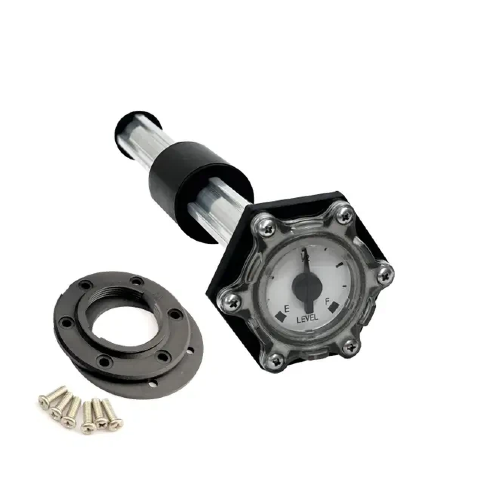
Reliable products can still develop problems after long use, especially when installation, liquid conditions, or daily maintenance are not ideal. That is why Mechanical Level Gauges should be understood as working parts of the tank system, not just simple accessories. Bluefin Sensor Technologies Limited develops level-sensor, float-switch, and gauge solutions for fuel, diesel, and water applications, and understanding common failures is one of the best ways to keep a gauge accurate, dependable, and easier to maintain over time.
Why Mechanical Level Gauges Usually Fail Slowly, Not Suddenly
Simple construction makes issues easier to trace
One strength of a mechanical gauge is that problems are often easier to identify than in more complex systems. The reading may drift slowly, the float may move less smoothly, or the sealing area may begin to show small leaks. These signs usually appear before complete failure.
That makes diagnosis more practical. Instead of guessing, operators can often trace the issue to float movement, linkage wear, poor sealing, or installation problems.
Many product failures actually begin as installation or maintenance problems
Many so-called product failures begin somewhere else. Poor alignment, incorrect sealing, wrong model selection, or lack of cleaning can gradually reduce performance. In these cases, the gauge itself may not be badly designed. It may simply be working in the wrong conditions or with the wrong setup.
That is why the correct fix is not always replacement. Sometimes the better answer is cleaning, resealing, adjustment, or correcting the original installation.
Failure Point 1: The Float Stops Moving Freely
Buildup, contamination, or internal obstruction
One of the most common tank gauge problems is restricted float movement. Dirt, sludge, sticky residue, corrosion, or debris can stop the float from rising and falling smoothly. When that happens, the visible reading becomes unreliable.
Internal obstructions can also create the same problem. Baffles, pipes, narrow walls, or a poor mounting position may leave too little room for float travel.
Wrong float selection for the liquid or tank
Some float problems are not caused by wear at all. They come from product mismatch. A float that works well in one liquid or one tank shape may not work equally well in another.
This is why repeated movement problems should not always be treated as normal aging. Sometimes the gauge is simply not the right fit for the application.
How to inspect and fix the problem
Start by checking whether the float can move through its full range. If contamination is visible, cleaning may solve the problem. If the float is damaged or unsuitable for the liquid, replacement may be necessary.
If the cause is tank interference or a poor mounting location, the installation should be corrected. Repeated repairs will not help much if the original problem is mismatch.
Failure Point 2: The Indicator Reading Becomes Inaccurate
Wear in the tape, linkage, spring, or dial mechanism
A gauge can still move and still be wrong. Over time, wear in the tape, linkage, spring, or dial can reduce reading accuracy. The display may respond, but it no longer reflects the real tank level closely enough.
This is one of the more serious issues because it can continue unnoticed for some time while users believe the reading is still dependable.
Reading drift caused by poor installation or misalignment
Inaccurate readings are not always caused by worn parts. Poor alignment during installation can also create reading drift. If the gauge body is stressed or mounted at the wrong reference point, the display may be off from the beginning.
This is why some “performance problems” are actually installation problems that show up later.
How to verify whether the problem is mechanical or application-related
A practical check is to compare the display with a known liquid level under different conditions. A consistent error may point to installation reference or calibration. Irregular movement is more likely to suggest wear or internal resistance.
The goal is to determine whether the issue comes from the mechanism, the mounting condition, or the application itself.
Failure Point 3: Leakage Around the Mounting Area
Seal damage, incorrect tightening, or mounting stress
Leaks usually begin at the mounting interface rather than inside the main mechanism. Damaged seals, uneven tightening, or installation stress can all lead to leakage over time.
This is one reason installation quality matters so much. A well-made gauge can still perform badly if the mounting area was not sealed correctly.
Why fluid type matters for gasket and sealing material
Different liquids affect seals in different ways. Fuel, diesel, water, and oil systems may require different gasket materials depending on compatibility and working conditions.
That means a leak is not always solved by tightening alone. Sometimes the sealing material itself is the wrong match for the medium.
Repair steps and when replacement is safer
If the leak is caused by surface contamination, poor tightening, or a damaged gasket, resealing may be enough. The mounting surface should be checked carefully before reassembly.
If leakage keeps returning, or if the gauge body is already stressed or damaged, replacement is often the safer long-term choice.
Failure Point 4: Poor Performance in Harsh Conditions
Vibration, temperature shifts, moisture, and corrosion
Harsh environments shorten the life of many tank components, and gauges are no exception. Vibration can affect stability, temperature changes can affect seals, and moisture or corrosion can gradually increase wear.
These problems are usually slow, which makes them easy to ignore until the gauge becomes noticeably less reliable.
Why outdoor and mobile equipment need more than a generic gauge
A gauge used indoors on a stationary system may not perform equally well on outdoor equipment, mobile fuel tanks, or rough industrial machinery. These applications demand better matching in material, sealing, and mounting stability.
That is why a generic product often creates repeat trouble in harsher service.
How to reduce repeat failures in rough service
Repeat failures can often be reduced by checking whether the model is actually suitable for the environment, improving mounting stability, and replacing worn parts before the problem becomes severe.
In many cases, the best fix is using a gauge designed for the real operating conditions.
Failure Point 5: The Gauge Was Never the Right Fit for the Job
Wrong length, wrong mounting, wrong material, or wrong fluid match
Some recurring failures are really selection errors. The gauge may have the wrong length for the tank, the wrong mounting style for the layout, or the wrong materials for the liquid.
When that happens, cleaning and repair only provide temporary relief because the core mismatch remains.
Signs that replacement is better than repair
If the same issue keeps returning after cleaning, resealing, or adjustment, replacement may be the smarter option. Repeated leakage, chronic inaccurate reading, and ongoing float problems often point to a gauge that was never properly matched.
Repair is useful when the product is basically right for the job. It is less useful when the job itself requires a different model.
A Practical Troubleshooting Process for Operators
Start with the visible symptom
Troubleshooting should begin with what the operator can clearly see. Is the reading stuck, drifting, unstable, or leaking? A visible symptom gives the fastest route to the real cause.
Check movement, sealing, and installation condition
After that, inspect the most likely areas: float movement, linkage response, sealing condition, and mounting quality. This often reveals whether the issue is wear, contamination, or installation-related.
Decide whether to clean, repair, recalibrate, or replace
Once the cause is clearer, the action becomes easier to choose. Dirt may need cleaning. Seal damage may need resealing. Wear may need repair. A repeated mismatch may require replacement. The best fix is the one that addresses the real cause rather than only the visible symptom.
Common Mechanical Level Gauge Problems, Likely Causes, and Recommended Fixes
Symptom | Likely cause | Fast check | Best fix |
Stuck float movement | Dirt, sludge, obstruction | Check float travel | Clean or clear obstruction |
Inaccurate reading | Worn linkage or poor alignment | Compare with known level | Adjust or replace worn parts |
Leakage at mounting area | Damaged seal or poor tightening | Inspect gasket and surface | Reseal or replace parts |
Poor outdoor performance | Vibration, moisture, corrosion | Review environment | Use a better-matched model |
Repeated failure | Wrong size or application mismatch | Review tank and liquid details | Replace with correct gauge |
How Better Product Matching Prevents Most Problems
Why custom specification reduces field trouble
Many repeat failures can be prevented before installation ever begins. A gauge chosen for the real tank depth, medium, mounting type, and operating environment usually performs more consistently and lasts longer.
What information to confirm before reordering
Before reordering, users should confirm the liquid type, tank dimensions, mounting method, operating environment, and the exact failure seen in the previous unit. That helps prevent the same problem from returning.
How Bluefin Sensor supports longer service life
Bluefin Sensor supports longer service life by helping customers match the gauge to the real application rather than treating all tanks as the same. In fuel, diesel, and water systems, better matching usually means fewer field problems and better long-term value.
Conclusion
Most mechanical gauge problems become manageable once the likely failure points are checked in the right order. Clean what is dirty, reseal what is leaking, repair what is worn, and replace what was never properly matched in the first place. Bluefin Sensor Technologies Limited helps customers reduce repeat trouble through better application-based solutions for fuel, water, and diesel systems, and the best long-term answer is often a properly specified tank level gauge that suits the tank, the medium, and the working environment from the start. If you are reviewing a current issue or planning a replacement, contact us to discuss the right solution.
FAQ
1. Why do mechanical level gauges usually fail slowly?
They usually fail slowly because wear, contamination, leakage, and misalignment often develop gradually rather than appearing all at once.
2. What is the most common cause of mechanical level gauge troubleshooting?
One of the most common causes is restricted float movement caused by dirt, sludge, obstruction, or poor matching to the tank and liquid.
3. Can a leaking gauge be repaired?
Yes, if the leak is caused by seal damage, poor tightening, or dirty mounting surfaces. If leakage keeps returning, replacement may be the better option.
4. How can I reduce repeat tank gauge problems?
You can reduce repeat problems by improving installation quality, keeping the gauge clean, using suitable sealing materials, and selecting a model that truly matches the application.


