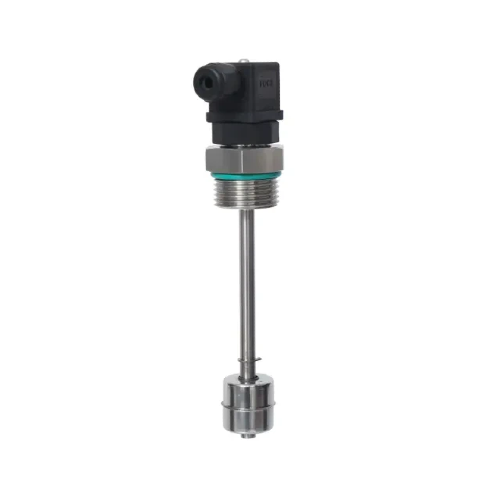
Liquid-level detection plays a vital role in a wide range of applications—from automotive fuel tanks to industrial process vessels to home-appliance reservoirs. When a device such as a level switch is used to detect whether a tank is full or empty, how accurate can you expect that switch to be? That is the core question we explore in this article: How accurate are level switches?
We will cover what “accuracy” means for a level switch, examine the technologies and types of level switches and how accuracy differs among them, explore the key factors that affect accuracy, review application-specific accuracy demands, and offer practical tips to maximise accuracy in your system. By the end you will have a clear understanding of what to expect when selecting a level switch—and how to ensure it performs as required.
1. Understanding Level Switch Accuracy
1.1 What Accuracy Means for a Level Switch
When we talk about the accuracy of a level switch, we are referring to how reliably the device detects the set point(s) and outputs the correct signal when the liquid (or material) reaches that point. This includes several aspects:
Repeatability – how closely successive activation points align under the same conditions.
Tolerance / deviation – how far off from the nominal set-point the actual activation occurs.
Hysteresis – the difference between activation (rising level) and deactivation (falling level), which may affect effective accuracy.
Response time and threshold precision – especially in automated systems where timing matters.
In many point-level switches, the device only needs to detect a threshold (ON/OFF) rather than measure continuously—but even for that function, accuracy matters. In more advanced systems where multiple thresholds or even near-continuous level detection is required, the precision demands are higher.
1.2 Why Accuracy Matters
Accuracy of a level switch is not just an academic concern—it has very real consequences:
In safety-critical systems, an inaccurate level switch may lead to overfill, dry-run, leaks or environmental hazards.
In automated control systems, an inaccurate signal can trigger inappropriate responses, affecting process efficiency or equipment life.
In inventory and asset tracking (e.g., fuel storage, chemical tanks), inaccurate level detection leads to incorrect volume calculations and may affect business metrics.
In maintenance and reliability, a switch with uncertain activation may lead to frequent troubleshooting or false alarms, increasing downtime and cost.
Because of all this, when selecting a level switch one must evaluate not only the nominal specifications, but also the real-world accuracy under the intended application conditions.
2. Types of Level Switches and Their Typical Accuracy
Different types of level switches offer different accuracy levels. Below we examine several common technologies and discuss the typical accuracy one might expect.
2.1 Float Switches
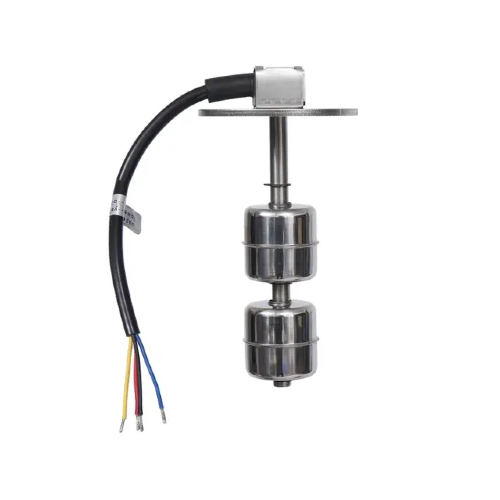
A float-type level switch uses a buoyant element that moves with the liquid level and actuates a switch when a threshold is reached. Mechanical and relatively simple, these devices are widely used for basic ON/OFF detection.
Typical accuracy: Because of mechanical tolerances, movement of the float, fluid perturbation, mounting position, and switching hysteresis, accuracy may range from a few millimetres to centimetres depending on tank size and installation.
Suitability: Best for simpler applications where a single threshold (e.g., high-level alarm, pump cutoff) is needed and extreme precision is not required.
2.2 Capacitive Level Switches
Capacitive level switches detect changes in capacitance caused by the presence of a liquid or material at the probe. These sensors can often be adjusted to detect a set point and are capable of greater precision and sensitivity than simple mechanical switches.
Typical accuracy: These devices may achieve millimetre-level detection in favourable conditions.
Suitability: Useful for environments where the medium is consistent, and where a higher threshold accuracy or multiple set points are needed.
2.3 Optical & Vibrating / Tuning Fork Level Switches
These switches use either optical sensing (a prism or tip that changes reflection when liquid contacts it) or vibrating probes (a fork that changes vibration when submerged). They are often non-contact (or minimal contact), and tend to perform well in more demanding media.
Typical accuracy: Because of their sensitivity and stability, these switches can achieve very tight tolerances (millimetre scale) and are suited for applications requiring high reliability and precision.
Suitability: Ideal for aggressive liquids (chemical, oil), foaming or turbulenced fluid surfaces, or where non-contact sensing is preferred.
2.4 Conductive / Rotary Paddle Level Switches
While less common for liquids in some applications, conductive (electrode) switches and paddle switches for bulk solids also fall under level switch technology. Accuracy in these cases is often lower because of material variability and switching thresholds.
Typical accuracy: For electrode switches, activation tolerance may depend on liquid conductivity, contact surface, and tank geometry—so the “accuracy” may be broader.
Suitability: More for bulk detection (high/low), or solids rather than precision liquid measurement.
2.5 Summary Table: Typical Accuracy by Type
Type of Level Switch | Typical Accuracy / Tolerance | Key Advantages | Typical Limitations |
Float Switch | Few mm to cm depending on mount | Simple, cost-effective | Less precise, mechanical parts, affected by fluid motion |
Capacitive Level Switch | Millimetre-level under optimal conditions | High sensitivity, adjustable | Requires calibration, media must have consistent properties |
Optical / Vibrating / Tuning Fork | Millimetre scale, high repeatability | Minimal contact, works in difficult media | Higher cost, may require more sophisticated installation |
Conductive / Paddle Level Switch | Larger tolerance (cm+) for liquids or solids | Robust for solids or bulk applications | Lower precision, more media-dependent |
3. Factors Affecting the Accuracy of Level Switches
No level switch works in isolation; many real-world factors influence how accurate it will be in practice. Understanding and controlling these factors is essential to achieving the performance you need.
3.1 Installation-Related Factors
Mounting position: Is the switch side-mounted, top-mounted, tilted? Deviations from ideal orientation change the effective set-point.
Tank geometry and shape: Sloped bottoms, narrow vessels, inaccessible mounts affect the real liquid surface relative to the sensing point.
Fluid motion, turbulence or agitation: If the liquid surface is disturbed (waves, foam, jets) the switch may see false activations or delay activation.
Clearance and obstructions: Floats may hit walls or get fouled; vibrating probes may be obstructed.
Stilling well or shield requirements: In turbulent media, a stilling well may stabilise the level at the sensing point.
3.2 Environmental Factors
Temperature and pressure: These affect sensor materials, electronics, float density, and switching mechanism.
Liquid properties: Density, dielectric constant, opacity, foam, entrained air, suspended solids—all alter sensor response or effective “surface” reference.
Corrosive or aggressive media: Over-time wear or coating can degrade accuracy. Sensor design must match media.
Electrical noise / interference: For electronic switches, noise may cause false signals or masking of actual threshold.
Mechanical vibration or shock: Floats or mechanical linkages may shift, degrade or mis-actuate.
3.3 Sensor Design and Material
Construction materials: Float size/material affects buoyancy, drift; probes must resist fouling, coating, corrosion.
Switching mechanism: Mechanical contacts may have greater tolerance than solid-state sensors; electronic type may offer finer resolution.
Calibration and tolerance specification: The manufacturer’s stated tolerance (e.g., ±5 mm) sets the baseline. Without calibration the actual error may be larger.
Repeatability vs. accuracy: A switch may reliably activate at the same point (repeatability) but may still be offset from the nominal set-point (accuracy).
Hysteresis and dead band: The larger the hysteresis, the less precise the “true” set-point activation will be.
3.4 Calibration & Maintenance
Accuracy will degrade over time if calibration and maintenance are ignored. Some key practices:
Establish reference level and verify actual switch activation points periodically.
Clean and inspect switch mechanism for fouling, wear or damage.
Verify electrical output and compare against expected values.
Re-calibrate if significant drift is found or after medium changes.
Keep records of performance and deviations to anticipate maintenance.
3.5 Putting It All Together
In a perfect environment—with optimal mounting, calm fluid, consistent media, correct materials, and periodic calibration—a high-quality level switch might approach millimetre-level accuracy. But in real-world industrial or field applications, the actual effective accuracy will often be wider because of cumulative tolerances, mounting deviations, fluid dynamics and environmental conditions. Therefore, when specifying a level switch, you should view accuracy not just as the component spec, but as the system accuracy—accounting for all these factors.
4. Accuracy Requirements in Different Applications
4.1 Automotive Fuel Level Monitoring
In automotive or off-highway vehicles, the level switch may monitor fuel, oil or coolant reservoirs. Requirements include: vibration resistance, thermal cycling, tilt/angle changes, compact installation, and high reliability. In many cases the switch is used for warnings rather than precise volume calculation, so accuracy tolerances may be in tens of millimetres. For advanced fuel gauge integration, higher precision may be required.
4.2 Industrial Tanks and Gensets
In industrial fuel tanks, genset water/oil reservoirs, and process vessels, accuracy demands are stricter. Avoiding overfill, ensuring run-dry protection, and integration with automated systems mean the level switch may need tight tolerance and high repeatability. Accuracy requirements may fall within a few millimetres—particularly for expensive media or safety-critical fluids. Advanced sensor technologies (capacitive or vibrating probes) are preferred.
4.3 Home Appliances and Small Tanks
In home appliances—washing machines, water softeners, dispenser tanks—the level switch is often used for simple ON/OFF control. The accuracy needed is relatively modest, perhaps in the order of centimetres. Reliability and cost-effectiveness dominate rather than ultra-tight precision. A well-mounted float switch often suffices here.
4.4 Summary: Setting the Right Accuracy Expectation
When specifying a level switch, it is wise to ask:
What is the worst permissible deviation (in mm or % of tank height) to keep the process safe or efficient?
Is the output used for a simple alarm, or for precise volume measurement or automation?
What environmental, media or mounting constraints exist that will degrade accuracy?
By aligning the accuracy expectation with the application requirement (and accepting a realistic “system” accuracy rather than a component ideal), you can choose a level switch that fits the job without over-spending.
5. Tips to Maximise Level Switch Accuracy
Choose the right technology: For tight accuracy, select sensors suited to medium and environment.
Install carefully: Follow manufacturer instructions, avoid turbulence, splash or foam.
Match materials to media: Ensure chemical and temperature compatibility.
Bring installation tolerances into spec: Measure exact set-points, account for fluid surface behaviour.
Calibrate and test: Verify activation points post-installation and periodically.
Maintain records: Inspect for fouling, wear, and electronics degradation.
Communicate with suppliers: Provide details for customised solutions.
Plan for system accuracy: Consider all real-world factors, not just device spec.
6. Conclusion
The accuracy of a level switch is influenced by several key factors, including sensor technology, installation, media characteristics, environmental conditions, calibration, and ongoing maintenance. While simple float switches can provide reliable centimetre-level accuracy for basic applications, advanced solutions such as capacitive, optical, or vibrating probes are capable of millimetre-level precision when properly installed and maintained. Choosing the right type of level switch for your specific application is essential to ensure optimal performance, whether you are monitoring automotive fuel tanks, industrial reservoirs, or water levels in home appliances. To achieve consistent and dependable operation, it is equally important to follow correct installation practices and implement routine checks and calibration. For businesses or individuals seeking tailored solutions and expert guidance in selecting, installing, or customising level switches, partnering with a trusted provider like Bluefin Sensor Technologies Limited can help match the most suitable sensor to your precise needs. Their expertise in high-quality level switch and float switch products ensures that you can maintain accuracy, reliability, and efficiency across diverse applications, reducing risk and improving overall system performance. Contacting their team can provide professional support and recommendations for your unique liquid-level monitoring challenges.
7. FAQ
Q1: What is the typical accuracy range of different level switch types?
Float switches: mm to cm depending on installation.
Capacitive/optical/vibrating: millimetre-level in controlled conditions.
Q2: How does installation affect level switch accuracy?
Improper mounting, turbulence, poor clearance or fluid agitation reduces accuracy.
Q3: Can level switches maintain accuracy in challenging liquids like foam or sludge?
Yes, if the correct technology (vibrating or optical) and installation (shielding, stilling wells) are used.
Q4: How often should a level switch be calibrated?
Calibration depends on application; industrial systems may need semi-annual checks, simpler systems less often.
Q5: Why is choosing a high-quality manufacturer important?
Manufacturer defines tolerances, material quality, and can provide solutions matching the environment, ensuring accurate and reliable operation.


