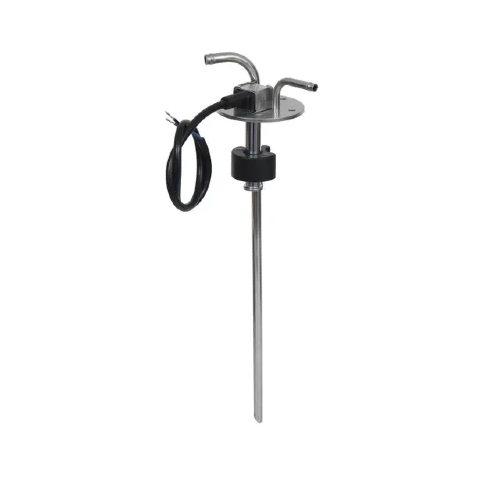
In modern industries, automotive systems, and household applications, monitoring liquid levels is essential for operational safety, efficiency, and reliable performance. Two of the most commonly used devices for this purpose are level switches and level transmitters. While both are designed to measure and monitor liquid or solid levels, they serve different purposes and operate in different ways. Understanding the differences between these two types of devices is crucial for engineers, operators, and system designers to select the right solution for their needs.
A level switch is primarily a point-level detection device that triggers an action, such as turning a pump on or off, opening or closing a valve, or activating an alarm when a certain liquid or solid level is reached. In contrast, a level transmitter provides continuous monitoring of liquid levels and outputs an analog or digital signal to automated control systems for precise measurement and process management.
In this article, we will explore the definitions, working principles, applications, advantages, and key differences between level switches and level transmitters. We will also provide guidance on selecting the right device for specific industrial, automotive, and household applications.
1. Understanding a Level Switch
A level switch is a device designed to detect the presence or absence of a liquid or solid at a specific point in a container and provide a discrete on/off signal. Level switches are widely used in various industries due to their simplicity, reliability, and cost-effectiveness.
1.1 Definition and Purpose
The primary purpose of a level switch is to monitor specific liquid or solid levels and trigger a control action. This could include activating a pump, closing a valve, or initiating an alarm when the material reaches a minimum or maximum threshold.
Unlike continuous measurement devices, a level switch only detects a particular level or “set point,” making it ideal for applications where precise measurement is less critical but safety or operational control is essential.
1.2 How Level Switches Work
Level switches can operate using a variety of principles depending on the application:
Float Level Switches: Utilize a floating element that rises or falls with the liquid level, mechanically triggering a switch when a set point is reached.
Capacitive Level Switches: Detect changes in capacitance caused by the presence of liquid or solid material.
Optical Level Switches: Use light refraction or reflection to detect the presence of liquid.
Vibrating Level Switches: Detect solids or viscous liquids based on changes in vibration frequency.
The key feature of all level switches is that they provide a discrete output, often in the form of a simple ON/OFF signal, indicating whether the liquid or solid has reached a predefined level.
2. Understanding a Level Transmitter
While a level switch detects specific points, a level transmitter provides continuous measurement of liquid or solid levels within a container. Level transmitters are critical for applications requiring precise monitoring, data logging, or integration with automated control systems.
2.1 Definition and Purpose
A level transmitter is designed to measure the level continuously and output an analog or digital signal, allowing operators and systems to monitor the exact level at any time. This makes level transmitters essential for process control, inventory management, and automated system integration.
2.2 How Level Transmitters Work
Level transmitters can operate using multiple principles depending on the measurement requirements:
Radar Level Transmitters: Use microwave radar signals to determine liquid level based on the time of flight.
Ultrasonic Level Transmitters: Use ultrasonic waves to measure distance from the sensor to the liquid surface.
Pressure-Based Transmitters: Measure the hydrostatic pressure at the bottom of a tank to calculate liquid level.
Capacitive and Guided Wave Radar: Detect levels based on changes in capacitance or guided radar signals.
Unlike level switches, level transmitters provide a continuous output, often as a 4-20 mA analog signal or digital communication such as HART, Profibus, or Modbus, which can be used in automated control systems, data monitoring, and process analysis.
3. Key Differences Between Level Switch and Level Transmitter
Although both level switches and level transmitters are used to monitor liquid or solid levels, they serve different purposes and operate in fundamentally different ways. Understanding these differences is essential for selecting the right device for a specific application, ensuring operational safety, efficiency, and reliability.
3.1 Signal Output
Feature | Level Switch | Level Transmitter |
Signal Type | Discrete (ON/OFF) | Continuous (Analog/Digital) |
Control Action | Triggers alarms, pumps, valves | Provides precise measurement data |
Integration with PLC | Limited | Easily integrated with control systems |
Level switches provide a discrete signal, meaning they simply indicate whether a liquid or solid has reached a specific point. This ON/OFF signal is sufficient to trigger pumps, valves, or alarms, making them ideal for safety applications and simple automation.
Level transmitters, in contrast, offer a continuous signal output, either analog (e.g., 4–20 mA) or digital (e.g., HART, Modbus), which provides precise, real-time measurement of the liquid or solid level. This continuous data can be used for advanced process control, inventory monitoring, or integration with automated systems for detailed analysis.
3.2 Measurement Type
Level switches are designed for point-level detection, which means they only monitor whether a certain threshold has been reached—minimum, maximum, or a specific intermediate point. They do not provide information about levels between these set points.
Level transmitters, on the other hand, provide continuous level measurement, giving operators or automated systems a complete picture of the liquid or solid volume at any moment. This allows for precise process management and decision-making based on accurate real-time data.
3.3 Applications
Level switches are most commonly used for safety and protection, including overflow prevention, dry running protection, or low-level alerts. They are also applied in simple automation scenarios where only ON/OFF control is required.
Level transmitters are used in more complex applications, such as process control, inventory management, and systems requiring continuous monitoring. They are essential when precision, data recording, and system integration are needed to maintain efficiency and reliability.
3.4 Complexity and Cost
Level transmitters are generally more complex and expensive due to their continuous measurement capabilities, advanced digital communication options, and higher precision. In contrast, level switches are simpler, easier to install and maintain, and more cost-effective, making them ideal for applications where only basic monitoring or safety protection is required.
4. When to Use a Level Switch vs. a Level Transmitter
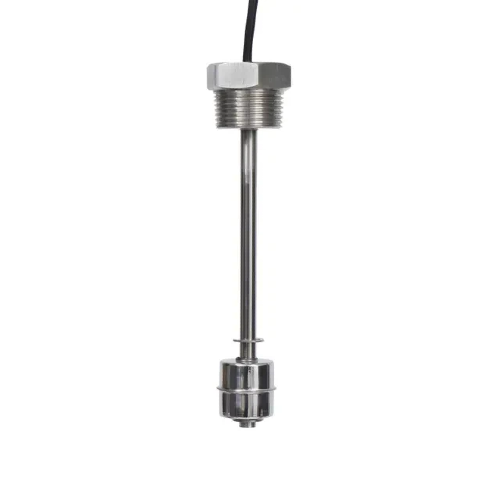
Choosing between a level switch and a level transmitter depends on the specific requirements of the application.
4.1 Safety and Protection
For applications where the primary goal is to prevent overflow, dry running, or system damage, a level switch is ideal. Its discrete ON/OFF signal is sufficient to activate pumps, valves, or alarms.
4.2 Process Control and Monitoring
When precise liquid measurement, continuous monitoring, and integration with automated systems are required, a level transmitter is the preferred choice. It allows operators to track exact levels, make process adjustments, and gather data for analysis.
4.3 Selection Guidelines
Key factors to consider include:
Fluid Type: Conductive, corrosive, viscous, or particulate.
Tank Height: Tall tanks may require specific transmitter types for accuracy.
Measurement Accuracy: Point detection versus continuous measurement.
Integration Requirements: Need for automated control and data logging.
5. Advantages of Level Switches
Level switches offer several benefits, particularly in terms of simplicity, reliability, and cost-efficiency.
5.1 Safety and Reliability
Level switches provide reliable point-level detection, ensuring that pumps and valves operate within safe limits, preventing equipment damage and system failures.
5.2 Ease of Installation and Maintenance
These devices are generally compact, require minimal wiring, and are easy to install. Maintenance is straightforward, making them suitable for environments where frequent attention is not feasible.
5.3 Cost-Effectiveness
Level switches are less expensive than continuous measurement devices, offering a practical solution for basic monitoring and protection needs without compromising safety.
6. Advantages of Level Transmitters
Level transmitters offer precision, continuous monitoring, and integration with modern control systems, making them indispensable in advanced applications.
6.1 Continuous Measurement
They provide real-time liquid or solid level data, allowing operators to monitor trends, detect anomalies, and respond quickly to changes.
6.2 Automation and Integration
Level transmitters can be integrated with PLCs, SCADA systems, or remote monitoring solutions, enabling fully automated control and sophisticated process management.
6.3 High Accuracy and Flexibility
Level transmitters deliver precise measurements under varying conditions and can be adapted for different liquids, tank sizes, or environmental conditions, providing versatile solutions for complex applications.
7. Conclusion
In summary, a level switch is ideal for point-level detection, providing simple ON/OFF signals for safety and equipment protection, while a level transmitter offers continuous measurement with analog or digital output, enabling precise monitoring, process control, and integration with automated systems. Selecting the right device depends on your specific application, required accuracy, and system needs.
For reliable safety measures, level switches provide efficient, cost-effective solutions. For continuous monitoring and advanced process control, level transmitters deliver high precision and seamless integration. For engineers, operators, and system designers seeking expert guidance, high-quality products, or tailored solutions, Bluefin Sensor Technologies Limited offers a wide range of reliable liquid level detection devices. Their team can help identify the most suitable level switch or transmitter for your operational requirements, ensuring optimal performance, safety, and efficiency across industrial, automotive, and household applications.
8. FAQ
Can a level switch replace a level transmitter?
No. Level switches are ideal for simple point-level detection but cannot provide continuous level data.
Do level transmitters provide safety functions?
They can, but their main purpose is continuous monitoring; additional alarms may be required.
Which is more cost-effective?
Level switches are generally less expensive and easier to maintain, suitable for basic applications.
Can both devices be used together?
Yes. In complex systems, a level switch can provide safety protection, while a level transmitter provides precise monitoring.
How to choose between a level switch and a level transmitter?
Consider fluid type, precision requirements, installation environment, and whether point detection or continuous measurement is needed.


