Monitoring liquid levels is a fundamental requirement across industries, from industrial process control to automotive systems and household appliances. Accurate liquid-level detection ensures operational efficiency, safety, and system reliability. Two common devices used for point-level detection are the float switch and the level switch. While these terms are sometimes used interchangeably, they refer to devices with distinct technologies, capabilities, and applications.
Understanding the difference between a float switch and a level switch is crucial when designing systems that rely on precise and reliable level measurement. Choosing the wrong device can result in false alarms, system failures, increased maintenance costs, or even operational hazards. Proper selection enhances safety, reduces downtime, and ensures operational efficiency.
This article explores the technical differences, operational advantages, environmental suitability, and application scopes of float switches and level switches. Additionally, it provides guidance on how to select the most appropriate device for a given application, ensuring that the chosen solution offers optimal performance and long-term reliability. By the end of this article, readers will understand which device is suitable for their specific needs and the factors that influence accurate level detection.
1. Understanding the Basics
1.1 What is a Float Switch?
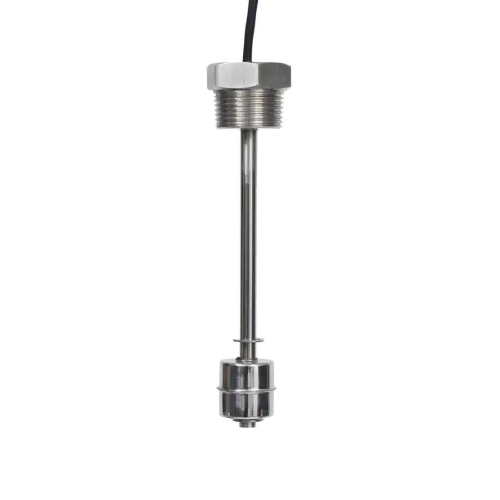
A float switch is a simple device used to detect the presence or absence of liquid at a predetermined point. It operates using a buoyant float that moves vertically with the liquid level. When the float reaches a set position, it mechanically triggers a switch, which can activate pumps, alarms, or control systems.
Float switches are typically used for:
Pump control in water tanks or reservoirs
High-level or low-level alarms
Basic automation tasks where only point-level detection is required
The simplicity of float switches is one of their key advantages. They generally do not require complex electronics or calibration, making them a cost-effective choice for straightforward applications. The mechanical action ensures a reliable switch actuation even in the absence of electrical components. However, their simplicity also imposes limitations, particularly in terms of accuracy, sensitivity to liquid turbulence, and adaptability to challenging environments.
Float switches are commonly constructed from corrosion-resistant materials such as stainless steel, polypropylene, or PVC, which allows them to operate in neutral or mildly aggressive liquids. Their operation is straightforward: as the liquid rises or falls, the float moves with it, triggering a magnetic or mechanical contact. This design makes float switches highly reliable for simple on/off detection but less suitable for precise or complex control applications.
1.2 What is a Level Switch?
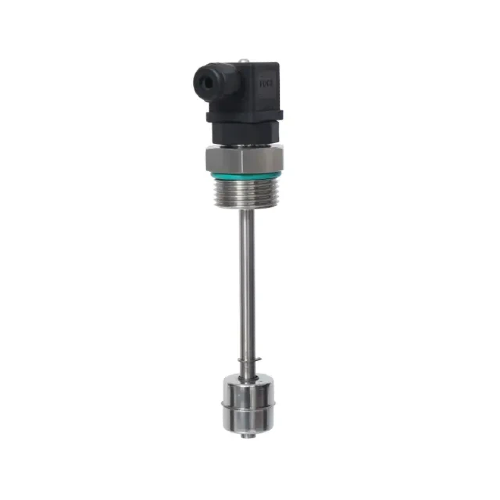
A level switch, in the broader sense, refers to any device that detects the level of a liquid or bulk material at a specific point. Unlike float switches, level switches encompass multiple sensing technologies, including mechanical, capacitive, optical, vibrating/tuning fork, and conductive/electrode-based devices.
Level switches are designed for more demanding applications, providing enhanced precision, faster response times, and greater environmental adaptability. They are commonly used in:
Industrial process control
Automotive fuel tanks and reservoirs
Chemical and corrosive liquid handling
High-accuracy home appliances
Level switches offer the ability to integrate with automated control systems, enabling more complex operations such as sequential pump activation, remote monitoring, and alarm management. Their versatility makes them suitable for applications that require high precision, adaptability to challenging liquids, or long-term reliability with minimal maintenance.
2. Key Differences Between Float Switch and Level Switch
2.1 Technology and Design
Float switches are typically mechanical devices that rely on the buoyancy of a float to trigger a switch. Common designs include:
Magnetically actuated float switches, where a magnet inside the float triggers a reed switch
Mechanical lever float switches, which physically actuate a mechanical contact
Level switches, by contrast, employ a variety of sensing technologies depending on the application requirements:
Capacitive: Measures changes in capacitance caused by the presence of a liquid or bulk material near the probe
Optical: Uses light reflection or refraction to detect liquid contact at the sensor tip
Vibrating/Tuning Fork: Detects changes in vibration frequency when the fork comes into contact with a medium
Conductive/Electrode: Completes an electrical circuit when a conductive liquid touches the electrodes
The technological diversity of level switches allows them to handle foaming liquids, highly viscous substances, and chemically aggressive media with reliable performance. In addition, advanced level switches often include electronic components for signal processing, self-diagnostics, and integration with digital control systems, which is not possible with simple float switches.
2.2 Accuracy and Sensitivity
Accuracy is a significant differentiator between float switches and level switches. Float switches generally provide centimeter-level precision, which is sufficient for simple control tasks.
Device | Accuracy | Typical Applications | Limitations |
Float Switch | Centimeter-level | Basic pump control, alarms | Sensitive to turbulence, foam, low precision |
Capacitive Level Switch | Millimeter-level | Industrial chemicals, fuel tanks | Requires calibration, affected by dielectric properties |
Optical Level Switch | High | Clean water, light oils | Limited to transparent or clean liquids |
Vibrating/Tuning Fork | Very high | Sludges, viscous liquids | Higher cost, requires sturdy installation |
Conductive/Electrode | Moderate to high | Conductive fluids, water treatment | Only suitable for conductive liquids |
Level switches, especially capacitive, optical, or vibrating types, provide much higher sensitivity, allowing them to detect small changes in level accurately. They are designed to maintain precision even in the presence of turbulence, foam, or varying liquid properties, making them suitable for critical industrial or automated systems.
2.3 Environmental Adaptability
Environmental conditions play a critical role in sensor selection.
Float switches: Best suited for calm, clean liquids with low viscosity. They may produce false signals in turbulent, foamy, or chemically aggressive environments.
Level switches: Designed to operate reliably under a wide range of conditions, including high temperatures, high pressures, corrosive or aggressive liquids, foaming substances, and viscous media. Their robust construction and advanced sensing mechanisms allow them to maintain consistent performance in challenging operational environments.
2.4 Application Scope
The application scope of float switches is limited to simple liquid monitoring tasks:
Basic water or fuel tank monitoring
Pump on/off control
Single-point alarms
Level switches, in contrast, are suitable for complex applications requiring high precision and reliability:
Industrial automation and process control
Automotive fuel systems and gensets
Chemical, petrochemical, and wastewater industries
Home appliances requiring precise liquid monitoring
The broader application range of level switches is a direct result of their advanced technology, higher precision, and environmental adaptability.
2.5 Cost Considerations
Float switches: Offer low-cost solutions, simple installation, and minimal maintenance. Ideal for straightforward applications where accuracy and environmental challenges are limited.
Level switches: Higher initial investment but provide enhanced accuracy, long-term reliability, and the ability to operate in demanding environments. For critical applications, the higher cost is justified by the benefits of improved performance, reduced maintenance, and lower downtime.
3. Selecting Between a Float Switch and a Level Switch
3.1 Assessing Application Needs
Selecting the appropriate device starts with a thorough understanding of operational requirements:
Precision: Determine whether centimeter-level detection is sufficient or if millimeter-level accuracy is needed.
Medium type: Assess liquid characteristics such as viscosity, conductivity, corrosiveness, and foaming tendency.
Automation integration: Consider whether the device needs to communicate with PLCs, SCADA systems, or other digital control platforms.
3.2 Long-term Reliability and Maintenance
Maintenance requirements differ between device types:
Float switches: Simple mechanical design allows minimal maintenance, though mechanical components may wear over time.
Level switches: Advanced designs require periodic inspection and occasional calibration, but maintain consistent accuracy over longer service periods, even in challenging environments.
3.3 Decision-making Guidelines
Simple applications: Use a float switch for basic on/off detection or alarms in clean, calm liquids.
Complex applications: Use a level switch for high-accuracy detection, automated control integration, or challenging media with turbulence, foam, or corrosive properties. Proper selection ensures reliable operation, minimal downtime, and precise process control.
4. Conclusion
Selecting the right level switch requires a thorough evaluation of your medium, operating environment, required precision, installation limitations, and system integration needs. While float switches offer a cost-effective solution for straightforward applications, advanced technologies—such as capacitive, optical, or vibrating switches—provide superior accuracy, reliability, and adaptability in demanding conditions. Ensuring consistent and precise level monitoring is critical for operational safety, efficiency, and long-term system performance. Partnering with a knowledgeable provider like Bluefin Sensor Technologies Limited can simplify this process by offering professional guidance on selecting the ideal level switch for your specific application. Their expertise spans a wide range of products, including custom float switches and advanced level switches suitable for industrial, automotive, and domestic use. By consulting with such a provider, you can ensure the chosen sensor not only meets technical requirements but also integrates seamlessly into your control systems, reducing maintenance needs and operational risks. Engaging with an experienced partner like Bluefin Sensor Technologies Limited can help optimize performance, enhance process reliability, and provide peace of mind with solutions tailored to your exact level monitoring requirements.
5. FAQ
Q1: Can a float switch replace a level switch in industrial applications?
Float switches are suitable for simple, low-precision applications. For critical industrial setups, a level switch is recommended due to higher accuracy, environmental adaptability, and integration capabilities.
Q2: Which is more accurate: a float switch or a level switch?
Level switches generally provide millimeter-level precision, whereas float switches are accurate to the centimeter level.
Q3: Are float switches suitable for corrosive or foamy liquids?
Float switches are limited to clean, low-viscosity liquids. Level switches are designed to operate reliably in foamy, viscous, or chemically aggressive media.
Q4: How does the cost of a level switch compare to a float switch?
Float switches are low-cost and simple, while level switches have higher initial costs but provide greater long-term reliability, accuracy, and adaptability.
Q5: When should I consider upgrading from a float switch to a level switch?
When an application requires higher precision, automation integration, challenging media handling, or long-term reliability, a level switch is the more suitable option.


