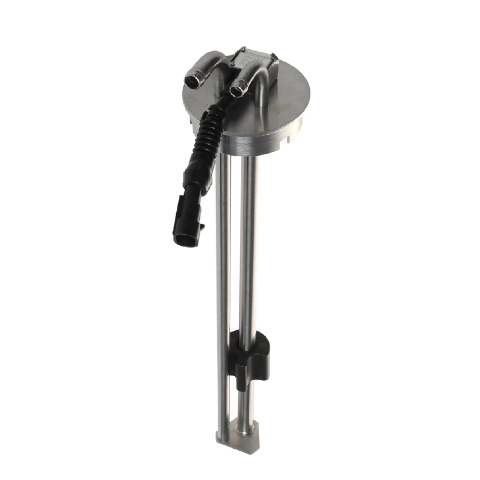
Reliable liquid monitoring is the quiet backbone of many industrial and commercial systems. Tanks rarely fail because liquid cannot be stored properly; they fail because the level is not monitored at the right moment or with the right device. A water level probe sensor is designed precisely for this purpose: to detect liquid presence or level changes inside a tank and convert that information into signals that operators, alarms, or automated control systems can use. Understanding how this type of sensor works helps engineers and system designers build safer pump control systems, prevent overflow or dry-running equipment, and maintain stable operations. For many tank monitoring applications, a probe-based sensor is one of the most reliable and practical solutions available.
What a water level probe sensor actually does
The difference between detecting level and measuring level
One of the first things to understand is the difference between level detection and level measurement. These two concepts are often confused, but they serve different purposes.
Level detection typically means identifying whether liquid has reached a certain point. For example, a sensor may indicate that a tank is empty, half full, or has reached a high-level alarm threshold. In these cases, the goal is to trigger an action such as starting or stopping a pump.
Level measurement, on the other hand, involves continuously tracking the liquid height within the tank. While some systems require precise measurement, many industrial processes simply need reliable detection at specific points.
A probe-based sensor is commonly used for detection tasks because it offers strong stability and simple operation. When the liquid reaches the probe, the sensor registers the change and sends a signal to a control system.
Why “probe” usually suggests direct contact with the liquid
The word “probe” generally indicates that the sensing element is directly exposed to the liquid being monitored. Instead of measuring the level indirectly through pressure or ultrasonic waves, the probe physically interacts with the liquid environment.
Direct-contact sensing provides several advantages. It often results in faster response times and more consistent readings in applications where liquid composition is stable. Water storage tanks, coolant reservoirs, and pump protection systems are typical environments where probe sensors perform well.
Because the probe sits inside the tank, material durability becomes important. Stainless steel is widely used for probe construction because it resists corrosion, maintains structural strength, and performs well in water-based environments.
Where it fits in a tank monitoring or pump protection system
A probe level sensor usually operates as part of a broader control system. It may connect to an alarm, a display gauge, or a programmable logic controller that manages pumps or valves.
For example, in a water storage tank system, the probe may detect a low-level condition and send a signal to start a refill pump. When the tank reaches a high level, the sensor triggers another signal that stops the pump, preventing overflow.
Because of this role, the reliability of the sensor directly influences the safety and efficiency of the entire system.
How a water level probe sensor works in simple terms
The basic sensing principle behind probe-based level detection
The working principle of most probe-based level sensors relies on the interaction between the probe electrode and the liquid medium. When liquid touches the probe, it completes an electrical path or changes the electrical characteristics around the sensing element.
In conductive liquids such as water, the probe detects the presence of liquid by measuring conductivity between electrodes. When the circuit is completed, the sensor recognizes that the liquid has reached the probe level.
Other probe designs use slightly different electrical responses, but the concept remains similar: the sensor detects a physical interaction with the liquid and translates that interaction into a signal.
How liquid contact becomes an electrical signal
Inside the sensor housing, a small electronic circuit interprets the change detected at the probe tip. When the liquid makes contact, the electrical properties change and the circuit produces an output signal.
That signal may be a simple on/off switch output, which is commonly used in pump control systems. In other applications, the sensor may send a different type of signal that communicates with monitoring equipment.
The conversion from liquid contact to electrical output is what makes the sensor useful in automation systems.
Why output type matters for alarms, displays, and controllers
The type of signal produced by a sensor determines how it can interact with other equipment.
Some systems only require a switch signal to trigger alarms or pump operation. In these cases, the sensor simply tells the system whether liquid is present at a specific level.
More complex monitoring systems may require signals that integrate with control panels or programmable controllers. Choosing the correct output ensures that the sensor communicates effectively with the rest of the equipment.
Manufacturers like Bluefin Sensor often customize the output configuration so that the sensor can integrate smoothly into the user’s control system.
Main components inside a stainless steel probe level sensor
Probe stem, sensing element, wiring, and mounting structure
A typical stainless steel probe level sensor contains several key components that work together to provide reliable operation.
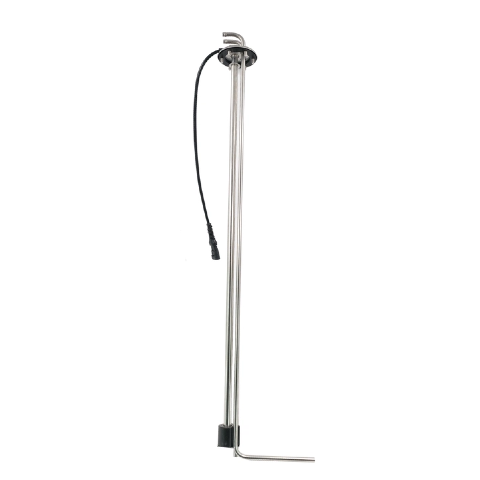
The probe stem extends into the tank and serves as the primary sensing element. Its length is usually customized to match the tank depth or the desired detection point.
The internal wiring connects the probe to the electronic circuit that processes the signal. This wiring must be sealed carefully to prevent moisture intrusion.
The mounting structure allows the sensor to be installed securely on the tank wall or tank top. Threaded fittings or flanges are common mounting options depending on the tank design.
Why stainless steel is widely used in water and industrial environments
Material choice is critical for sensors that operate inside liquid environments. Stainless steel has become a preferred material for probe sensors because it offers excellent corrosion resistance and mechanical strength.
In water systems, stainless steel maintains stability over long periods without degrading. It also tolerates temperature changes and minor chemical exposure better than many alternative materials.
This durability allows stainless steel probe sensors to maintain consistent performance even in demanding industrial environments.
How tank height, mounting style, and signal requirements affect the design
Every tank installation is slightly different. Some tanks are tall and narrow, while others are wide and shallow. The mounting location may be on the top of the tank or on the side wall.
These factors influence the sensor design. Probe length must match the detection point inside the tank. Mounting threads must match the tank opening. Signal configuration must match the control system.
Bluefin Sensor specializes in designing stainless steel probe sensors that can be adjusted according to these practical installation conditions.
Where water level probe sensors are commonly used
Water storage tanks and pump control systems
One of the most common applications is water storage tank monitoring. In these systems, sensors help control pumps that maintain the correct water level.
When the tank level drops below a set threshold, the sensor triggers the pump to refill the tank. Once the water reaches the upper limit, the pump stops automatically.
This simple automation prevents both overflow and pump dry-running.
Gensets, utility equipment, and compact tanks
Many power generation systems and utility machines rely on coolant or water tanks. Monitoring the level in these tanks helps protect equipment from overheating or operational failure.
Probe sensors are often used in compact tanks because they require minimal installation space and provide stable switching signals.
Process equipment where durability and stable output matter
Industrial process equipment frequently uses tanks for cooling water, cleaning fluids, or process liquids.
In these environments, sensors must operate reliably despite temperature changes, vibration, and extended operating hours. Stainless steel probe designs are commonly chosen for their long service life.
Water Level Probe Sensor Options by Use Case
Application | What the customer needs to detect | Typical output requirement | Why a stainless steel probe design helps |
Water storage tank | High and low level points | Switch output for pump control | Durable in water environments |
Industrial coolant tank | Minimum safe level | Alarm or shutdown signal | Resistant to corrosion |
Utility equipment tank | Level presence detection | Simple switching signal | Compact and reliable structure |
Process liquid tank | Stable detection in operating conditions | Control system integration | Strong mechanical stability |
What affects sensor accuracy and reliability in real use
Liquid type, conductivity, and contamination
Although probe sensors are designed for stable operation, liquid properties can influence performance. Conductive liquids such as water provide strong detection signals.
If the liquid contains heavy contamination or unusual chemical properties, the sensing behavior may change. In such cases, selecting the correct probe design becomes important.
Tank geometry, turbulence, and dead zones
Tank shape and internal flow patterns can also affect sensor readings. Turbulence near pump outlets or inlet pipes may cause momentary fluctuations in liquid level.
Proper placement of the probe helps avoid these unstable zones.
Installation height and threshold setting
The exact installation height determines when the sensor triggers a signal. If the probe is installed too close to the tank bottom or too close to the top, the system may not operate as intended.
Careful positioning ensures accurate control of the tank level.
What information customers should prepare before requesting a sensor
Tank depth and mounting method
Knowing the tank depth allows the manufacturer to determine the correct probe length. The mounting style determines how the sensor will be installed.
Required output signal and alarm points
Customers should also define how the sensor will interact with pumps, alarms, or controllers. This determines the output signal configuration.
Working medium, temperature, and cable needs
Information about the liquid type and operating temperature helps ensure that the sensor materials and wiring are suitable for the environment.
Conclusion
Reliable tank monitoring often depends on selecting the right sensing technology. A well-designed probe device provides accurate level detection, supports automation, and protects pumps and equipment from damage. By understanding how a liquid level probe sensor works and how it integrates into a control system, users can design safer and more efficient tank monitoring solutions. Bluefin Sensor Technologies Limited specializes in stainless steel probe sensors and level control devices, offering customized designs and fast delivery for a wide range of industrial applications. If you are planning a tank monitoring system or upgrading an existing one, contact us to discuss your project and find the most suitable sensor configuration.
FAQ
1. What is the difference between a water level probe sensor and a float switch?
A water level probe sensor typically detects liquid through electrical interaction with the probe, while a float switch relies on a mechanical float moving with the liquid level.
2. Can a water level probe sensor work in different tank sizes?
Yes. Probe length and mounting configuration can be customized to match different tank depths and installation requirements.
3. Is stainless steel necessary for water level sensors?
Stainless steel is widely used because it provides corrosion resistance and durability in water-based and industrial environments.
4. How often should a water level probe sensor be inspected?
Inspection intervals depend on the operating environment, but periodic checks help ensure stable performance and long service life.


