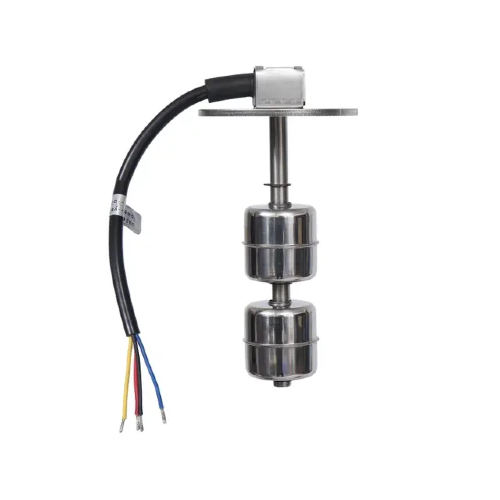
Monitoring liquid or bulk material levels is essential in a wide range of industries, including automotive, industrial process control, water treatment, and home appliances. Choosing the right level switch is critical to ensure safety, efficiency, and operational reliability. Selecting a level switch involves more than simply picking a sensor—it requires understanding your application requirements, the medium, operating environment, precision needs, and integration with control systems.
A properly selected level switch helps avoid costly equipment failures, reduces maintenance needs, and ensures accurate and timely monitoring of liquids or bulk materials. The wrong selection may lead to false alarms, overfilling, dry-run conditions, or safety hazards. This article provides a comprehensive guide on how to select level switch, including the types of switches available, key factors influencing selection, practical steps, and best practices. Following this guide will help engineers, facility managers, and system designers make informed decisions that enhance accuracy, reduce downtime, and improve overall system performance, ensuring a reliable solution tailored to specific operational needs.
1. Understanding Level Switches
1.1 What is a Level Switch?
A level switch is a device used to detect the presence or absence of a liquid or bulk material at a specific point. Unlike continuous level sensors, which provide real-time measurement of liquid height, level switches typically function as point-level indicators. They trigger an alarm, activate a pump, or send a signal to a control system when the material reaches a preset height.
Level switches are essential in ensuring operational safety and efficiency. They help maintain proper liquid levels, prevent overflow or dry-running of pumps, and integrate with automated systems to maintain process stability. The main purpose of a level switch is not continuous measurement but precise detection at critical points, which is often sufficient for many industrial and domestic applications.
Level switches are used across industries for purposes such as:
Pump control
High-level alarms
Low-level protection
Automated process control
Monitoring inventory levels in tanks or silos
1.2 Why Selecting the Right Level Switch Matters
Choosing the appropriate level switch is crucial because different applications have varied requirements in terms of precision, durability, and compatibility. Selecting the wrong type of switch can result in inaccurate readings, unnecessary maintenance, system failures, and even safety hazards. Proper selection ensures:
Accurate and repeatable measurements, reducing risk of overflow or dry-run situations
Compatibility with the medium and operational environment, extending the life of the sensor
Reduced maintenance and downtime, improving operational efficiency
Compliance with safety and regulatory standards, ensuring safe operation
In addition, selecting a switch with proper features, such as adjustable set points, robust construction, or advanced sensing technology, can significantly improve the longevity and reliability of the system. Understanding the application needs and environmental constraints is the first step toward achieving accurate and dependable liquid-level monitoring.
2. Identify Your Application Requirements
2.1 Type of Medium
Understanding the type of medium is fundamental when selecting a level switch. Different media have different physical and chemical properties that can affect sensor performance:
Liquids: Water, oils, fuels, chemicals, and slurries each have unique density, viscosity, conductivity, and dielectric characteristics. Selecting a switch that can operate accurately with the specific liquid type is crucial.
Bulk solids: Powders, grains, pellets, and sand require sensors that can tolerate particle build-up, dust, and flow irregularities.
Each medium imposes constraints on the type of switch that will function reliably. For example, foaming liquids, highly viscous materials, or chemically aggressive fluids require sensors designed to handle these conditions without false triggering or deterioration.
2.2 Operating Environment
The operating environment plays a significant role in switch performance and durability. Key environmental factors include:
Temperature: Sensors must withstand both high and low temperatures without altering their activation point or mechanical integrity. Extreme temperatures can affect the float buoyancy or electronic components in capacitive and optical switches.
Pressure: High-pressure tanks demand robust switches that can maintain accurate performance under stress.
Corrosive or aggressive liquids: Chemical resistance of sensor materials ensures long-term reliability in acidic, alkaline, or otherwise aggressive environments.
Surface conditions: Turbulence, foam, or bubbles may cause false activation in some sensors, requiring technologies capable of handling such conditions.
Proper evaluation of the operating environment ensures that the selected level switch will perform reliably over its expected lifespan.
2.3 Measurement Requirements
Defining the measurement requirements helps narrow down suitable switches:
Single-point detection vs. multiple points: Do you need only high/low alarms, or multiple thresholds? Multiple points allow for more precise control and process monitoring.
Precision requirements: Some applications demand millimeter-level precision, while others can function with centimeter-level tolerances.
Output signal: Consider the type of signal required—mechanical switch contacts, analog voltage/current, or digital communication for integration with PLC or SCADA systems.
2.4 Installation Constraints
The location and method of installation can significantly affect performance:
Space limitations: Some switches require vertical space, stilling wells, or protective housings to function correctly.
Orientation: Proper alignment and mounting position are crucial for float and probe movement.
Liquid dynamics: Agitation, waves, or turbulence may cause false readings; using a stilling well or shielded installation can mitigate these effects.
Considering installation constraints early prevents operational issues and reduces maintenance requirements later.
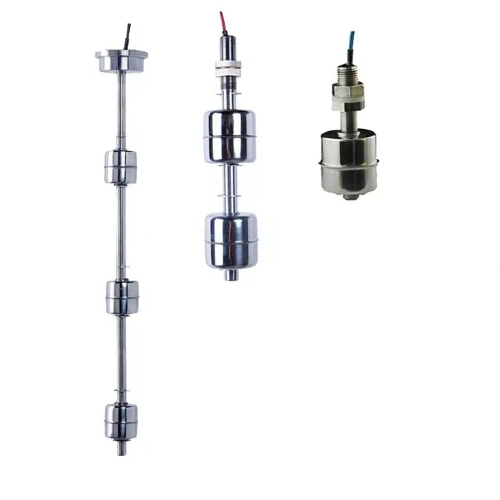
3. Compare Different Types of Level Switches
3.1 Float Level Switch
A float level switch consists of a buoyant float that rises or falls with the liquid level, mechanically actuating a switch when a threshold is reached.
Advantages:
Simple, cost-effective, and widely available
Easy to install and maintain
Reliable for basic ON/OFF control in calm liquids
Limitations:
Lower precision due to mechanical tolerances and float movement
Sensitive to turbulence, foam, or splashing
May require protective guides to avoid sticking or misalignment
Typical applications: Pump control, high/low-level alarms in clean liquids
3.2 Capacitive Level Switch
Capacitive switches detect the presence of a medium by measuring changes in capacitance between the probe and the tank wall or a reference probe.
Advantages:
High sensitivity and millimeter-level precision
Can detect conductive and non-conductive liquids
Adjustable detection point for multiple thresholds
Limitations:
Requires calibration for optimal accuracy
Performance may vary with medium properties such as density and dielectric constant
Typical applications: Industrial liquids, chemical tanks, process automation
3.3 Optical Level Switch
Optical switches rely on a prism or light sensor that changes reflection when contacted by liquid.
Advantages:
Fast response time and non-contact operation
Minimal maintenance for clean liquids
Compact design for confined spaces
Limitations:
Best suited for clear or non-foaming liquids
Performance affected by opaque or turbid media
Typical applications: Laboratory systems, clean water tanks, light oils
3.4 Vibrating / Tuning Fork Level Switch
Vibrating switches detect a change in vibration frequency when the probe comes into contact with a liquid.
Advantages:
High precision and repeatability
Suitable for foamy, viscous, or corrosive liquids
Resistant to false triggering from turbulence
Limitations:
Higher cost than simpler switches
Requires robust mounting and occasional maintenance
Typical applications: Wastewater, heavy oils, slurries
3.5 Conductive / Electrode Level Switch
Electrode switches detect conductive liquids through an electrical circuit.
Advantages:
Simple and reliable
Low maintenance
Works well with conductive fluids
Limitations:
Only effective with conductive media
Less precise with complex or contaminated liquids
Typical applications: Water treatment, industrial chemical tanks
3.6 Comparison Table
Level Switch Type | Advantages | Limitations | Typical Applications |
Float Switch | Simple, cost-effective | Lower precision, sensitive to waves | Basic pump control, alarms |
Capacitive | High accuracy, versatile | Requires calibration | Industrial liquids, chemical tanks |
Optical | Fast, non-contact | Only for clean liquids | Clean water, light oils |
Vibrating/Tuning Fork | Accurate, foam-tolerant | Higher cost | Sludges, viscous fluids |
Conductive/Electrode | Reliable, simple | Only conductive media | Water treatment, chemical tanks |
4. Consider Additional Factors
4.1 Maintenance & Calibration
Regular inspection and calibration are essential to maintain accuracy and sensor life. Fouling, mechanical wear, and signal drift can reduce performance over time. Scheduled maintenance helps ensure the switch continues to operate at its designed activation point, maintaining system reliability.
4.2 Safety & Compliance
Level switches must comply with safety standards, especially in hazardous or corrosive environments. Explosion-proof designs, chemical-resistant materials, and certifications ensure safe and reliable operation.
4.3 Integration with Control Systems
Modern level switches often interface with automated systems, including PLCs, SCADA, or IoT platforms. Compatibility with communication protocols, signal output types, and integration requirements should be considered during selection.
4.4 Cost & Lifecycle
Consider both initial investment and long-term operational costs. While advanced switches may be more expensive upfront, they offer greater reliability, lower maintenance requirements, and reduced downtime, often resulting in lower total cost of ownership over the sensor's lifecycle.
5. Practical Steps to Select the Right Level Switch
Define the application and type of medium (liquid, slurry, or bulk solid).
Determine operating conditions, including temperature, pressure, and chemical compatibility.
Identify measurement and precision requirements, including single-point or multi-point detection.
Evaluate installation constraints, including space, orientation, and liquid dynamics.
Compare different level switch types to identify the best fit for accuracy, durability, and media compatibility.
Consider maintenance, safety, integration, and cost factors to ensure long-term reliability.
Partner with an experienced supplier to receive guidance and customized solutions when necessary.
6. Conclusion
Selecting the right level switch requires a thorough assessment of your medium, operating environment, precision requirements, installation constraints, and system integration needs. While simple float switches provide a cost-effective solution for straightforward applications, advanced technologies—such as capacitive, optical, or vibrating switches—offer superior accuracy, reliability, and performance in demanding conditions. Ensuring consistent and precise level monitoring involves following a structured selection process that considers all operational factors and long-term maintenance requirements. Partnering with a trusted expert like Bluefin Sensor Technologies Limited can simplify this process, providing professional guidance on choosing the most suitable level switch for your specific application. Their expertise spans a wide range of products, including custom float switches and advanced level switches designed for industrial, automotive, and domestic uses. Working with such a provider ensures that your chosen sensor not only meets technical specifications but also integrates seamlessly with your systems, enhancing efficiency and reliability. For businesses and engineers seeking dependable level monitoring solutions, consulting with Bluefin Sensor Technologies Limited can help identify the ideal sensor and support optimal installation, calibration, and ongoing performance, giving peace of mind and operational confidence across all applications.
7. FAQ
Q1: What factors should I consider first when selecting a level switch?
Identify the type of medium, operating environment, precision needs, and installation constraints.
Q2: Which type of level switch is best for foam or viscous liquids?
Vibrating/tuning fork or capacitive switches are suitable for challenging media.
Q3: How does installation location affect level switch performance?
Proper orientation, mounting, and protection against turbulence ensure reliable operation.
Q4: Do all level switches require calibration?
Advanced switches such as capacitive or vibrating sensors require periodic calibration; simple float switches may require minimal adjustment.
Q5: Why is it important to work with an experienced supplier?
Suppliers provide guidance on technology selection, installation best practices, and customized solutions for optimal performance.


