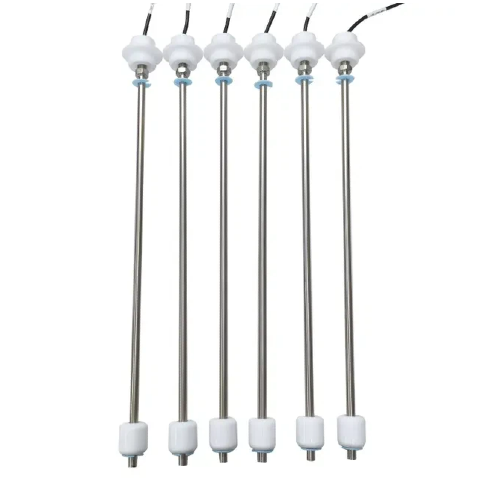
Buyers no longer view sensors as isolated hardware that simply report whether a tank is full or empty. In 2026, Smart Level Sensors are increasingly expected to deliver better connectivity, better visibility, faster response, and more useful data across the whole monitoring process. That shift is not happening in theory alone. Recent industry reporting points to the growing role of AI, IoT, edge processing, interoperability, and wireless deployment in modern sensing systems. For companies following these changes closely, Bluefin Sensor Technologies Limited is part of a market that is moving toward more connected and more application-ready liquid monitoring solutions.
Trend 1 and 2 — AI-Assisted Monitoring and Smarter Alerts
Why AI is changing how sensor data is interpreted
One of the biggest smart sensor trends in 2026 is the shift from connected sensing to intelligent sensing. The important change is not just that sensors collect more data. It is that AI is increasingly used to identify patterns, compare present conditions with normal operating behavior, and highlight unusual changes earlier. Industry sources tracking sensor and industrial IoT markets describe AI as moving from experimental use toward a more practical role in interpreting operating data and supporting faster decisions.
For liquid monitoring, that means a level sensor can contribute more than a simple reading. Instead of only showing a number, it can become part of a smarter system that notices unusual consumption, unstable refill timing, or changing tank behavior. This is especially useful where liquid level patterns matter as much as the current level itself.
From threshold alarms to context-aware monitoring
A second major trend is the move from simple threshold alarms to smarter alerts. Traditional monitoring often depends on fixed high and low points. That still matters, but buyers increasingly expect alerts that reflect actual operating context. If a tank is dropping faster than normal, that may deserve attention even before it reaches a minimum threshold. If refill timing becomes inconsistent, the system should be able to show that something has changed.
This is where AI sensor integration becomes commercially useful. The value is not just more notifications. The value is fewer meaningless alerts and better visibility into which changes actually need action. That makes liquid monitoring less reactive and more informative.
Trend 3 and 4 — Wireless Connectivity and Easier Deployment
Why wireless matters for modern monitoring environments
Wireless liquid monitoring continues to gain attention because it solves a practical deployment problem. Many systems are difficult or expensive to wire, especially when tanks are spread across a large site, placed outdoors, or added after the original equipment layout is complete. Industry sources tracking industrial wireless networks and broader IoT development say AI, LPWAN, edge computing, BLE advances, and related connectivity improvements are making wireless deployments more scalable and more useful in 2026.
For buyers, the appeal is simple. Wireless setups can reduce installation complexity, improve flexibility, and make it easier to expand monitoring later. In fast-moving projects, easier deployment can be just as important as sensor performance itself.
Remote visibility is becoming a baseline expectation
Remote visibility is no longer a premium extra in many use cases. It is becoming a baseline expectation. More users want access to liquid level data from wherever they are, whether they are managing one facility, multiple tanks, or mobile systems spread across different locations. The broader 2025–2026 IoT discussion increasingly treats remote insight, faster connectivity, and smarter device coordination as standard parts of modern operations.
That trend affects buying behavior directly. Customers are not only asking whether a sensor is accurate. They are also asking whether the data can be seen easily, shared quickly, and used in time to make better decisions.
Trend 5 and 6 — Edge Processing and Faster Response
Why local data handling matters
Edge processing is another important development in 2026. In simple terms, it means some decisions or data handling can happen closer to the sensor instead of sending every raw signal somewhere else first. Recent industry coverage describes edge computing and edge AI as valuable for real-time monitoring because they reduce delay and allow quicker response at the point of operation.
For level sensing, this matters because not every liquid monitoring event should wait for a distant system to interpret it. Some alerts and responses are more useful when they happen quickly. Edge logic helps support that speed.
Better responsiveness with less system burden
A related trend is that smarter local handling can reduce the burden on wider networks and software platforms. Instead of pushing every data point through the same path, systems can manage some tasks more efficiently at the sensing edge. That supports better responsiveness without making the whole monitoring structure overly heavy.
From a commercial perspective, this is attractive because it improves performance without demanding an unnecessarily complex setup. Buyers want smarter systems, but they also want systems that remain practical to deploy and manage.
Trend 7 and 8 — Higher Integration with Digital Platforms
Sensors are becoming part of larger operational ecosystems
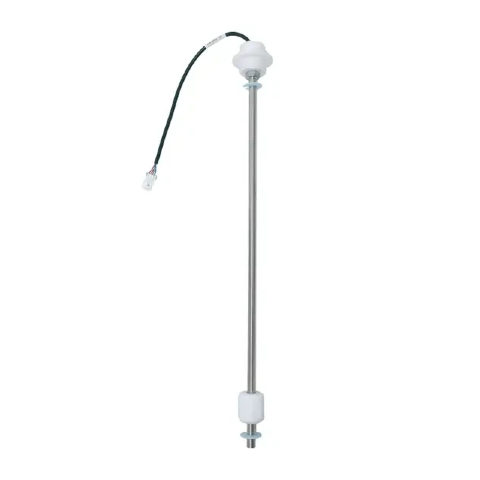
A smart level sensor in 2026 is increasingly expected to fit into a wider system rather than act alone. Industry analysis around digital industrial technologies points to a broader shift toward connected ecosystems in which sensors support dashboards, maintenance platforms, automation layers, and wider operational software.
This matters because users want level data to contribute to a larger workflow. They may want tank information to appear on a dashboard, support an alarm, assist maintenance planning, or connect with a controller. The sensor is still important, but its value grows when it works smoothly within the full monitoring environment.
Better interoperability improves long-term value
Interoperability is becoming a stronger buying factor for the same reason. As systems become more connected, buyers increasingly care about whether a sensor will integrate well with existing equipment and future upgrades. Broader industry discussion around connected devices and next-generation industrial systems repeatedly highlights fragmentation and interoperability as long-term concerns.
For liquid monitoring, this means compatibility matters more than ever. A sensor that performs well but cannot fit easily into the broader operating structure may create problems later. Long-term value depends on how well the product works with the rest of the system.
Trend 9 and 10 — Sustainability and More Application-Specific Design
Buyers want sensing that supports resource efficiency
Sustainability is no longer separate from performance. In 2026, more buyers want sensing solutions that help reduce waste, improve control, and support more efficient use of liquids and energy. ARC’s review of liquid level sensing trends specifically points to AI, IoT, and advanced technologies making sensors smarter, greener, and more supportive of sustainability goals.
In practical terms, this means liquid monitoring is increasingly connected to waste reduction and better system efficiency. Better visibility can help reduce overflow, unnecessary refills, and poor fluid control. That makes sensing technology part of responsible operations, not just measurement.
More industries want solutions tailored to their own environments
Another strong trend is application-specific design. Different industries are asking for sensors that reflect their actual environments rather than generic product assumptions. Automotive systems, gensets, water storage, appliance-related applications, and other liquid-handling setups all place different demands on size, durability, output, and integration.
That is why customization remains important even in a more digital market. The technology may be getting smarter, but buyers still want solutions shaped for real operating conditions. A sensor must match the application, not just the trend list.
What These 2026 Trends Mean for Buyers
Features matter less than usable value
The biggest lesson from these trends is that buyers should not chase buzzwords for their own sake. AI, wireless connectivity, edge processing, and platform integration all matter, but only when they improve real monitoring outcomes. The strongest systems are the ones that make liquid visibility better, response faster, and deployment more practical.
This is especially relevant in smart sensor trends 2026 discussions, where technology language can sometimes sound impressive without explaining the real operational gain. Buyers should keep asking a simple question: what does this feature improve in actual liquid monitoring?
Why dependable fundamentals still matter
Even with all the attention on AI and connectivity, the fundamentals have not changed. Accuracy still matters. Durability still matters. Compatibility still matters. Customization still matters. A sensor cannot deliver long-term value if it is hard to integrate, unreliable in the field, or poorly matched to the liquid system it is supposed to monitor.
That is why future-ready sensing is not only about adding new technology. It is about combining smarter capabilities with dependable core performance. For a company like Bluefin Sensor Technologies Limited, that balance is especially relevant because the market is clearly moving toward solutions that are both intelligent and practical.
Top 10 Trends and What They Mean in Practice
Trend | What is changing | Why it matters | Example impact on liquid monitoring |
AI-assisted monitoring | Data is interpreted more intelligently | Earlier pattern recognition | Faster detection of abnormal level behavior |
Smarter alerts | Alerts become more context-aware | Fewer meaningless warnings | Better response to unusual tank activity |
Wireless deployment | Less dependence on fixed wiring | Easier installation and expansion | Faster rollout across multiple tanks |
Remote visibility | Users expect access from anywhere | Better oversight | Quicker response across dispersed sites |
Edge processing | More local data handling | Reduced delay | Faster local alert response |
Lower system burden | Less need to send everything centrally | More efficient monitoring | Smoother operation in connected systems |
Platform integration | Sensors link with broader software layers | Better workflow value | Level data supports dashboards and alarms |
Interoperability | Compatibility matters more over time | Better long-term flexibility | Easier integration with existing systems |
Sustainability focus | Monitoring supports waste reduction | Better resource efficiency | Less overflow and unnecessary fluid loss |
Application-specific design | Solutions fit real operating needs | Better real-world performance | Improved matching for automotive, genset, and water systems |
Conclusion
The direction of 2026 is clear: smart level sensing is becoming more connected, more intelligent, and more shaped by real operating needs. The best products will not only measure accurately, but also fit into a broader monitoring strategy that improves visibility, response, and efficiency. Bluefin Sensor Technologies Limited operates in a market where buyers increasingly want better integration, stronger remote monitoring, and more useful liquid data in actual field applications. If you are evaluating future-ready sensing solutions, contact us to learn how Bluefin Sensor can support your project with advanced liquid monitoring systems.
FAQ
1. What are the biggest smart sensor trends in 2026?
The biggest trends include AI-assisted monitoring, smarter alerts, wireless deployment, edge processing, stronger interoperability, and greater integration with wider digital platforms.
2. Why is wireless liquid monitoring becoming more popular?
Because it makes deployment more flexible, reduces wiring constraints, and supports remote visibility across distributed sites and hard-to-reach tanks.
3. How does AI improve smart level sensors?
AI helps interpret sensor data more effectively by identifying patterns, highlighting unusual behavior, and supporting earlier, more useful alerts rather than relying only on fixed thresholds.
4. Do 2026 trends make traditional sensor basics less important?
No. Accuracy, durability, compatibility, and application fit still remain essential. New smart features add value, but they do not replace the need for dependable core sensor performance.


