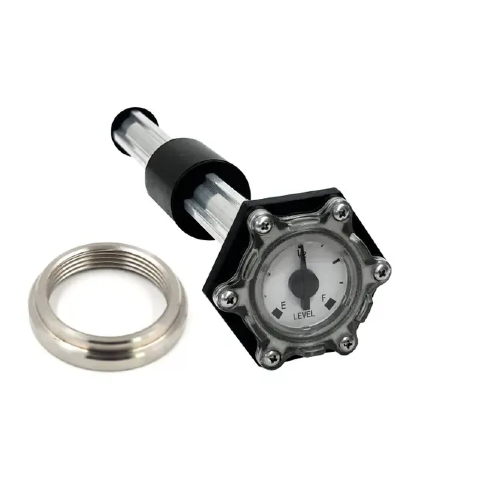
A clear tank reading can prevent unnecessary downtime, reduce guesswork, and make daily operation much easier. That is why Mechanical Level Gauges are still widely used in diesel, fuel, and water systems where operators want a visible, dependable, and easy-to-maintain level indication. At Bluefin Sensor Technologies Limited, we design and manufacture level sensors, float switches, gauges, alarms, and controller-based solutions, and mechanical gauging remains a practical choice for customers who value simple operation and durable performance.
What Is a Mechanical Level Gauge?
A simple device built for direct level indication
A mechanical level gauge is a device that shows tank level through physical movement instead of relying mainly on electronic signal processing. In simple terms, it turns the rise and fall of liquid inside the tank into a visible reading outside the tank. For many users, that direct approach is exactly the point.
This type of gauge is especially useful when the main goal is fast, local level checking. Instead of depending first on screens, software, or remote systems, the operator can simply look at the gauge and understand the tank status. That makes it a practical solution for many fuel, diesel, and water applications.
Where these gauges are commonly used
Mechanical level gauges are used in generator sets, construction equipment, mobile fuel tanks, stationary storage tanks, utility systems, and water tanks. They are also common in agricultural and industrial environments where users want a reliable reading without unnecessary system complexity.
Their continued use across so many industries shows that they are not just legacy products. They remain popular because they solve an everyday problem efficiently: they show tank content clearly and simply.
How Float and Tape Systems Actually Measure Tank Level
The float follows the liquid surface
The basic principle is easy to understand. A float sits on the surface of the liquid inside the tank. When the liquid level rises, the float rises with it. When the level drops, the float drops as well. The float moves naturally because of buoyancy, which makes this method stable and easy to apply in many common tank liquids.
This is one reason float-based measurement is so practical. The liquid itself drives the measurement, so the system starts with a very direct physical relationship between liquid level and float position.
How the tape transfers motion to the indicator
Once the float moves, that motion has to be shown as a readable result. In a float-and-tape gauge, the float is connected to a tape or mechanical linkage. As the float rises or falls, the tape moves and drives the indicator.
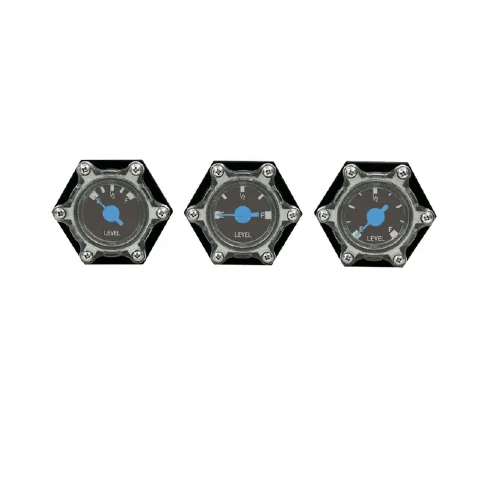
That indicator may be a dial, pointer, or another direct-reading display. The important point is that the gauge is not estimating the level through a complicated chain of signals. It is translating real movement inside the tank into a visible reading outside it.
Why mechanical transmission still matters
Mechanical transmission still matters because many users do not need an advanced digital system first. They need a tank reading that is easy to see, easy to trust, and easy to maintain. In many field applications, that matters more than remote connectivity.
A direct mechanical linkage also has a practical advantage: it is easier for many users to understand. If the float moves, the reading changes. If the reading becomes unstable, the issue is often easier to trace than in a more layered electronic setup.
Main Components Inside a Float-and-Tape Gauge
Float, tape, spring, dial, and mounting structure
A float-and-tape gauge works as a system, not as a collection of unrelated parts. The float follows the liquid surface. The tape transfers motion. The spring helps maintain proper tension. The dial or indicator shows the result to the user. The mounting structure secures the gauge to the tank and keeps the assembly in the correct position.
Each of these parts affects overall performance. If the float is poorly matched to the medium, or if the tape and indicator do not move smoothly together, the final reading will not be as dependable as it should be.
Why material quality affects long-term accuracy
Material quality matters because the gauge must keep working over time, not just during initial installation. Fuel, diesel, water, and oil systems can expose the product to vibration, moisture, residue, temperature changes, and wear. If parts corrode, seals weaken, or movement becomes rough, reading quality will decline.
That is why durability is closely tied to accuracy. A good mechanical gauge is not only readable when new. It is built to maintain stable operation in real working conditions. For companies like Bluefin Sensor, product matching and reliable construction are essential because customers need long-term performance, not just basic function.
What Affects Reading Accuracy in Real Tanks
Tank shape, fluid movement, and installation position
The same gauge may perform differently in different tanks. Tank depth, shape, internal obstacles, and installation position all affect float movement and reading consistency. A gauge that is well suited to one tank may not perform the same way in another.
Fluid movement also matters. Sloshing during transport, vibration from nearby equipment, or uneven operating conditions can cause temporary variation in the reading. That does not mean the gauge is failing, but it does mean the real application environment should be considered.
Fluid properties and operating conditions
Different liquids behave differently. Water, diesel, fuel, and other fluids may affect float response, smooth movement, and internal wear in different ways. Foam, contamination, viscosity, and temperature changes can also influence reading behavior.
In most cases, these factors do not rule out a mechanical solution. They simply show why correct product selection is important. A gauge should be chosen for the actual liquid and actual environment, not just for general appearance or size.
When good enough accuracy is exactly the right choice
Not every tank needs a highly advanced gauging system. In many day-to-day applications, a durable visual indication is the right answer. If the goal is to know whether the tank is low, half full, or near capacity in a dependable way, a mechanical gauge may offer the best balance of function and cost.
That is an important point for buyers. The best choice is not always the most complex one. It is the one that suits the task.
Mechanical Level Gauges Compared with Electronic Options
Where mechanical gauges are stronger
Mechanical gauges offer several clear strengths. They do not depend on a power supply for basic local reading. They are easy to understand at a glance. They often involve lower system complexity and can be more economical for straightforward applications.
They are also attractive in harsher environments because they avoid some of the electrical risks and maintenance concerns that can come with powered systems. For many users, that simplicity is a real operational advantage.
Where electronic systems may have an advantage
Electronic options can be a better fit when a site needs remote monitoring, automatic data transmission, or integration into a larger control system. In those cases, automation and connectivity may be worth the additional complexity.
Recognizing that difference makes the decision clearer. Mechanical and electronic solutions are not trying to do exactly the same job in every project.
Why many buyers still start with mechanical
Many buyers still start with mechanical because their immediate need is visibility and reliability. They want to know the tank level clearly, without building a more complex system than the application really requires. For that reason, mechanical gauging is often the most sensible first choice.
How to Tell If a Float-and-Tape Gauge Fits Your Application
Best-fit tank types and industries
Float-and-tape gauges are a strong fit for many fuel, diesel, and water systems where direct local indication is important. They are commonly used in generators, industrial tanks, utility equipment, agricultural systems, and machinery that benefits from a simple and readable tank display.
Questions buyers should ask before ordering
Before ordering, buyers should confirm the liquid type, tank depth, tank shape, mounting style, reading preference, and operating environment. Thread or flange requirements are also important, as are vibration, weather exposure, and any movement of the equipment or tank.
These details help ensure the gauge is chosen for the real application rather than treated as a generic part.
Why customization matters more than many buyers expect
Customization matters because tanks and operating conditions vary widely. A gauge that is matched to the actual tank usually installs more smoothly, reads more consistently, and lasts longer than a one-size-fits-all option.
That is why Bluefin Sensor focuses on practical application fit. A well-matched product gives the customer better performance from the beginning.
Key Parts of a Mechanical Float-and-Tape Gauge and What Each One Does
Component | Function | Common issue if poorly matched | Buyer takeaway |
Float | Follows the liquid surface | Unstable movement or weak buoyancy | Match float design to the liquid |
Tape | Transfers movement to the indicator | Wear or inconsistent response | Durable transmission supports clear reading |
Spring | Maintains tension | Irregular reading movement | Proper tension helps accuracy |
Dial or indicator | Shows level to the operator | Hard-to-read display | Visibility matters in daily use |
Mounting structure | Secures the gauge to the tank | Leakage or misalignment | Correct fit protects long-term performance |
Conclusion
Float-and-tape systems continue to prove that simple engineering can deliver real value in everyday tank monitoring. For fuel, water, and diesel applications, Bluefin Sensor Technologies Limited provides practical level solutions built around dependable performance, fast development, and strong manufacturing support, and a properly matched tank level gauge remains a smart choice for users who want direct reading, durability, and straightforward operation. If you are planning a new project or improving an existing tank system, contact us to discuss the right solution for your application.
FAQ
1. What are Mechanical Level Gauges used for?
Mechanical Level Gauges are used to show liquid level inside tanks through direct physical movement. They are commonly used in fuel, diesel, and water tanks where operators need a simple and visible reading.
2. How does a float and tape level gauge work?
A float moves with the liquid surface inside the tank. That movement is transferred through a tape or linkage to an external indicator, which shows the current tank level.
3. Are mechanical level gauges better than electronic systems?
They are often better for applications that need straightforward local indication, lower complexity, and dependable operation. Electronic systems may be better when remote monitoring or automation is required.
4. What should I check before ordering a fuel tank level gauge?
You should check the liquid type, tank depth, tank shape, mounting style, operating environment, and reading preference. These details help ensure the gauge fits the application correctly.


