
Two sensors may look similar in a catalog yet behave very differently once installed in a tank. Many engineers searching for a water level probe sensor encounter two common technologies: conductive level probes and capacitive level probes. Both are designed to detect liquid levels, but they operate on completely different sensing principles. Choosing the correct sensor therefore depends less on general specifications and more on the characteristics of the liquid, the structure of the tank, and the control objective of the system. Understanding how each technology works helps users select a level sensing solution that delivers stable signals, reliable automation, and long-term system performance.
What conductive and capacitive probes actually detect
How conductive probes rely on the liquid’s conductivity
Conductive level probes detect liquid presence by measuring electrical conductivity between electrodes. When a conductive liquid such as water touches the probe, the liquid completes an electrical circuit between the probe and a reference electrode or tank wall.
Once the circuit is completed, the sensor recognizes that the liquid has reached the probe level and sends a signal to the monitoring system or controller. Because water typically has sufficient electrical conductivity, conductive probes work particularly well in water storage tanks and many industrial liquid systems.
The sensing process is simple and direct. The probe interacts physically with the liquid, allowing the sensor to detect the presence of the liquid without complex signal processing.
How capacitive probes respond to dielectric change
Capacitive level probes operate based on a different principle. Instead of relying on conductivity, these sensors detect changes in capacitance that occur when the probe is surrounded by liquid rather than air.
Every material has a property called dielectric constant. When liquid replaces air around the probe, the dielectric environment changes. The sensor measures this change and determines that liquid is present.
This method allows capacitive sensors to detect liquids that may not conduct electricity effectively. As a result, they can be used with oils, chemicals, or other non-conductive fluids.
Why this difference matters in everyday applications
The fundamental difference between conductivity and capacitance determines how each sensor behaves in practical installations. Conductive probes depend on the electrical properties of the liquid itself. If the liquid conducts electricity, detection is straightforward and reliable.
Capacitive probes, however, rely on the surrounding dielectric environment. This means they may respond not only to liquid but also to buildup or environmental changes that alter the electrical field around the sensor.
Understanding these differences helps users predict how each sensor will perform in real-world tank environments.
Where conductive level probes perform best
Water-based media and simple point-level detection
Conductive probes are particularly effective in water-based media. Water storage tanks, cooling systems, and wastewater tanks are common environments where conductive sensors perform reliably.
These sensors are ideal for point-level detection, meaning they identify when liquid reaches a specific level inside the tank.
Because the sensing principle is simple, the signal produced is often stable and easy to interpret by controllers or alarm systems.
Applications that need clear on/off response
Many automation systems require clear switching signals rather than continuous measurement. Conductive probes are well suited for these tasks.
For example, when the liquid reaches the probe, the sensor activates the output signal. When the liquid level drops below the probe, the signal switches off.
This on/off response makes conductive probes highly effective for pump automation, tank refill systems, and overflow protection.
Cost and simplicity advantages
Conductive probes typically involve straightforward electronic circuitry and mechanical design. Because of this simplicity, they are often more economical compared with more complex sensing technologies.
Maintenance is also relatively simple, which makes them attractive for installations where reliability and ease of operation are priorities.
Stainless steel conductive probes are widely used because they combine durability with corrosion resistance in water environments.
Where capacitive level probes perform best
Low-conductivity or non-conductive media
Capacitive sensors become particularly valuable when the liquid does not conduct electricity effectively. Oils, fuels, and some chemical liquids may not provide the conductivity needed for conductive probes.
Because capacitive probes rely on dielectric properties rather than conductivity, they can detect these liquids more effectively.
Situations where non-contact-through-wall style detection may help
In some installations, capacitive sensors can detect liquid levels through the wall of a container if the wall material allows the electric field to pass through. This capability may simplify installation in certain cases.
For example, plastic containers sometimes allow capacitive sensors to detect liquid without direct contact.
This approach can reduce contamination risk in some specialized environments.
Sensitivity advantages and calibration considerations
Capacitive sensors can be very sensitive to small changes in the environment. While this sensitivity allows them to detect subtle changes in liquid presence, it also means they often require careful calibration.
Changes in temperature, buildup on the probe, or variations in liquid composition can influence sensor response.
Proper calibration ensures that the sensor distinguishes between the actual liquid level and environmental changes.
Which sensor is better for water tank applications
Cases where conductive sensing is the more direct option
For most water tank installations, conductive probes offer a straightforward solution. Because water conducts electricity, the sensor can detect liquid contact directly.
This approach provides stable switching signals that integrate easily with pump control systems or alarms.
In many municipal water tanks, cooling systems, and industrial water reservoirs, conductive probes remain the preferred choice due to their reliability and simplicity.
Cases where capacitive sensing avoids process constraints
Capacitive sensors may become useful when tank design prevents direct contact sensing or when the liquid composition changes frequently.
If buildup or coating is expected on the probe surface, capacitive detection may offer advantages depending on the environment.
Each installation therefore requires careful evaluation of operating conditions.
Why best depends on reliability in the actual tank
The best sensor is not necessarily the one with the most advanced technology. Instead, the most suitable solution is the one that delivers stable signals under real operating conditions.
Factors such as turbulence, contamination, temperature variation, and tank geometry can influence performance.
Understanding the real tank environment helps determine which sensing method will provide consistent operation.
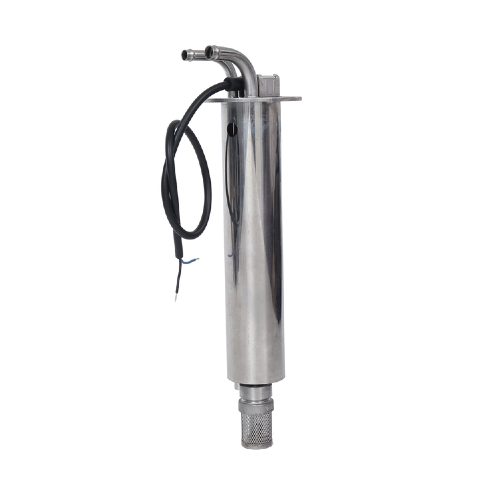
Factors buyers often overlook when comparing the two
Liquid composition changes over time
Many liquids change composition over time due to contamination, chemical reactions, or temperature variation. These changes can influence conductivity or dielectric properties.
Sensors that perform well during initial installation may behave differently months later if the liquid properties change significantly.
Monitoring these factors helps maintain long-term accuracy.
Buildup, fouling, and environmental contamination
Residue buildup on probes can influence both conductive and capacitive sensors. In conductive probes, buildup may reduce electrical contact. In capacitive probes, buildup may alter the dielectric environment.
Selecting appropriate materials and installing sensors in locations with minimal contamination can reduce these effects.
Tank material and mounting limitations
Tank material also affects sensor selection. Metal tanks often support conductive sensing because the tank wall can serve as a reference electrode.
Plastic tanks may require different configurations depending on the sensing technology used.
Understanding tank construction helps determine which sensor type will integrate more effectively.
Conductive vs. Capacitive Level Probes at a Glance
Comparison factor | Conductive probe | Capacitive probe | Best-fit application note |
Sensing principle | Detects electrical conductivity | Detects dielectric change | Depends on liquid properties |
Ideal liquids | Water and conductive fluids | Oils or non-conductive liquids | Match to liquid composition |
Signal stability | Typically very stable | May require calibration | Depends on environment |
Installation | Direct contact with liquid | May allow indirect detection | Tank design influences choice |
Cost and complexity | Generally simpler | More complex electronics | Consider system requirements |
How to choose based on the control task, not just the sensor type
High and low alarm applications
When the goal is to trigger alarms or activate pumps at specific liquid levels, simple point detection is often sufficient. Conductive probes provide stable switching signals that integrate easily with automation systems.
Continuous monitoring expectations
Some systems require continuous monitoring rather than simple detection points. Capacitive sensors may support these applications depending on system design and calibration requirements.
Integration with controllers displays or pump automation
Both sensor types can integrate with controllers, alarms, and pump automation systems. The key requirement is selecting a sensor output that matches the control system interface.
Bluefin Sensor Technologies Limited develops probe sensors and float switches that integrate easily with gauges, alarms, and controllers, providing complete monitoring solutions for tank systems.
A practical decision framework for customers
What to ask before requesting a quotation
Before selecting a sensor, it is helpful to define the operating conditions of the system. Important factors include the liquid type, tank size, installation location, and control objective.
Clear application details allow engineers to recommend a more accurate sensor configuration.
When customization matters more than sensor category
Many tanks require specific probe lengths, mounting threads, or output configurations. Customization ensures that the sensor fits the tank geometry and integrates smoothly with the monitoring system.
Bluefin Sensor Technologies Limited specializes in designing stainless steel probe sensors that match real tank installations and automation requirements.
How application details reduce selection mistakes
Providing accurate information about the application environment helps avoid common selection errors. Factors such as liquid temperature, turbulence, and contamination influence sensor performance.
When these details are considered during the design stage, the resulting sensor configuration becomes more reliable.
Conclusion
Comparing sensor technologies is only the first step in selecting a reliable level monitoring solution. The real objective is to match the sensing principle to the liquid properties, tank structure, and control requirements of the system. A properly selected liquid level probe sensor provides stable signals that support automation, protect equipment, and maintain consistent tank operation. Bluefin Sensor Technologies Limited designs and manufactures stainless steel level probes and float switches that can be customized for a wide range of tank monitoring applications. If you are planning a level control system or upgrading an existing installation, contact us to discuss your application and identify the most suitable sensing solution.
FAQ
What is the main difference between conductive and capacitive level probes?
Conductive probes detect liquid by measuring electrical conductivity, while capacitive probes detect changes in dielectric properties around the sensor.
Which sensor type is best for water tanks?
Conductive probes are often preferred for water tanks because water typically conducts electricity well, allowing reliable detection.
Can capacitive sensors detect liquids through container walls?
In some cases, capacitive sensors can detect liquids through non-metallic container walls if the material allows the electric field to pass through.
Are conductive level probes suitable for industrial automation systems?
Yes. Conductive probes are widely used in automation systems for pump control, tank monitoring, and overflow protection because they provide stable switching signals.


